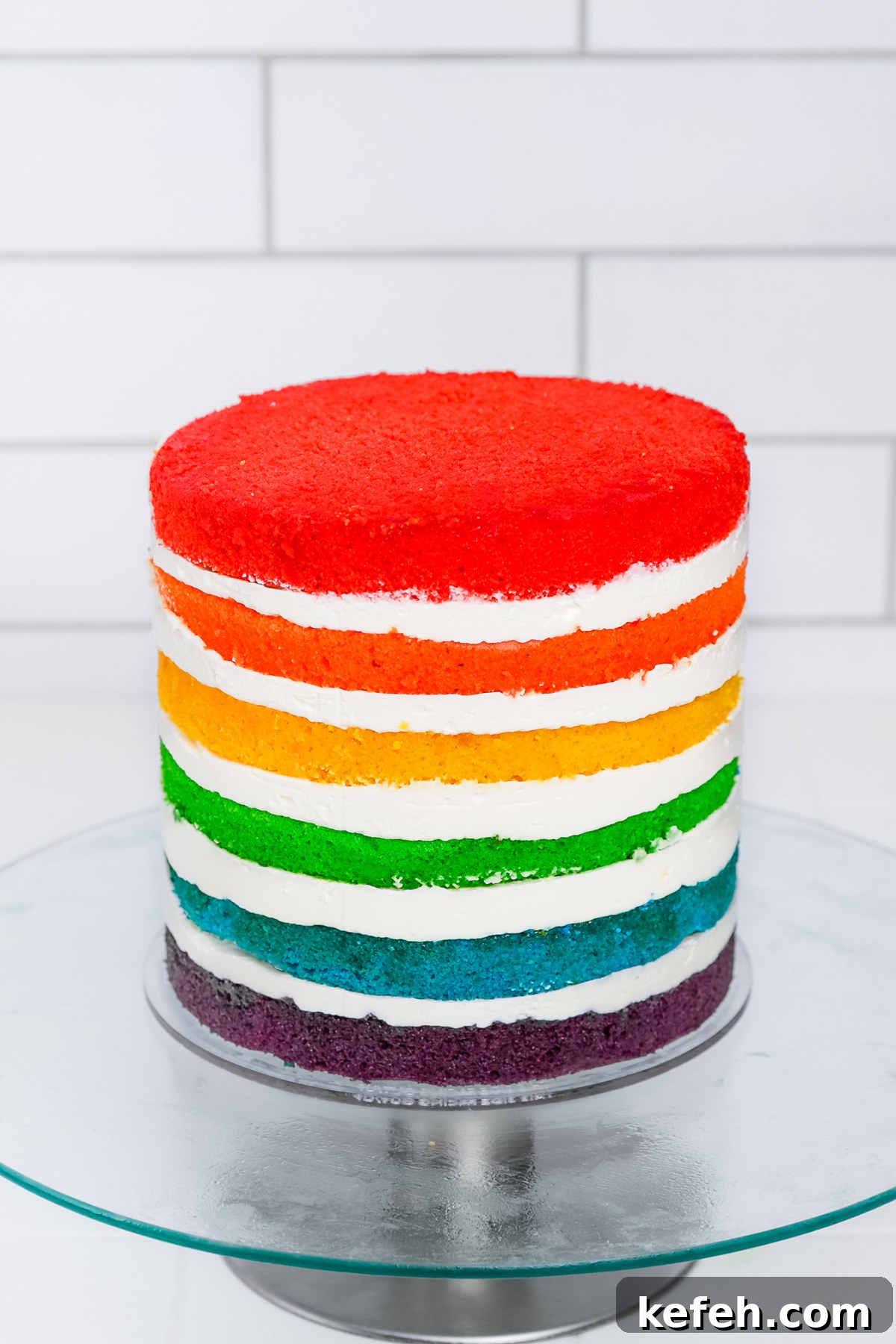
The secret to a layer cake that stays straight and looks impressive is in the assembly. You don’t need to be a pastry chef to succeed: with a few simple tricks you can stack your cake like a pro and build a solid base for frosting and smoothing.
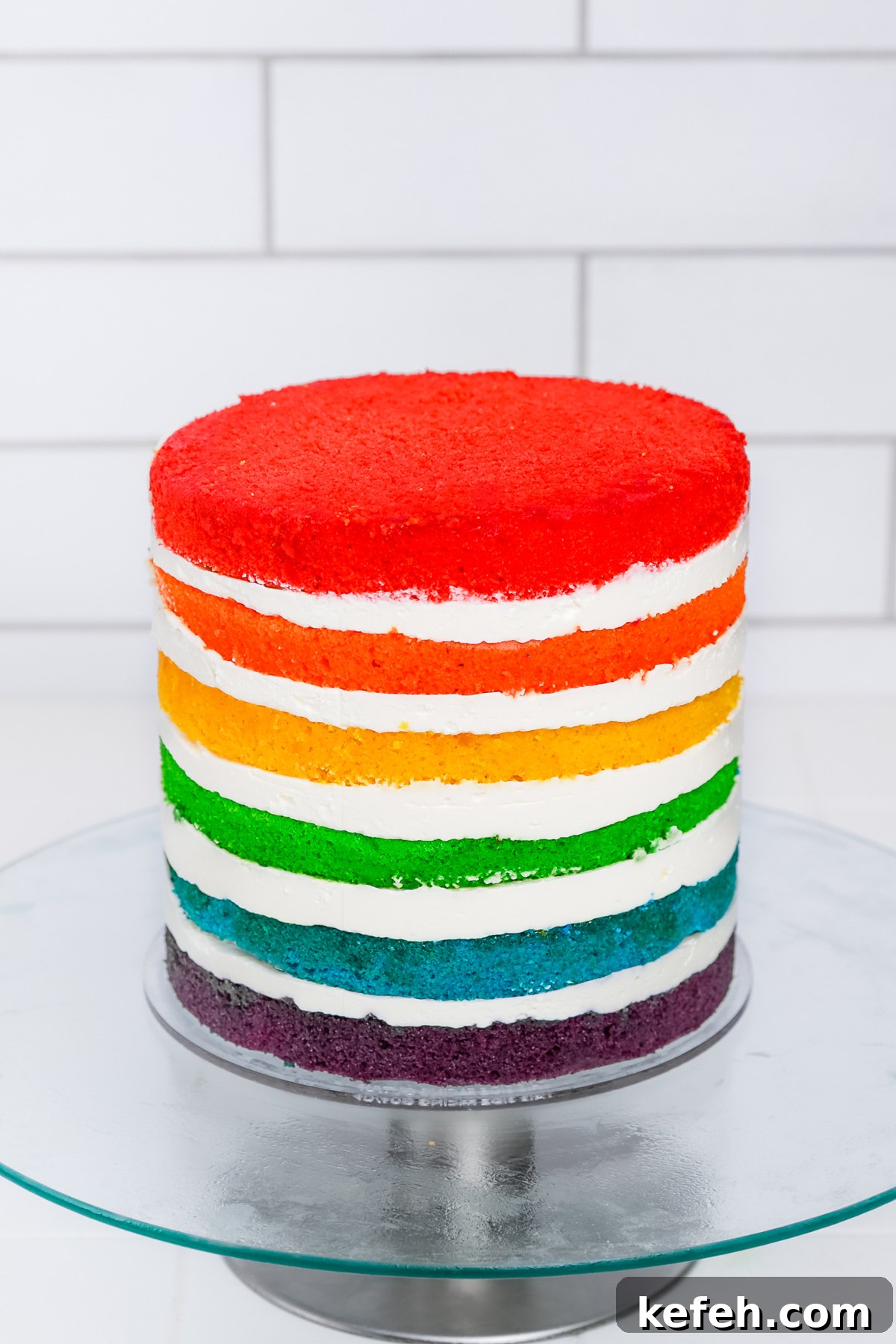
Why a good assembly is essential
A well-assembled layer cake is the foundation of a successful dessert. If the sponge layers are uneven or the filling is applied irregularly, the cake can lean or collapse. A straight, stable assembly also makes frosting and smoothing much easier, saving time and producing a much cleaner finish.
Choosing the right filling
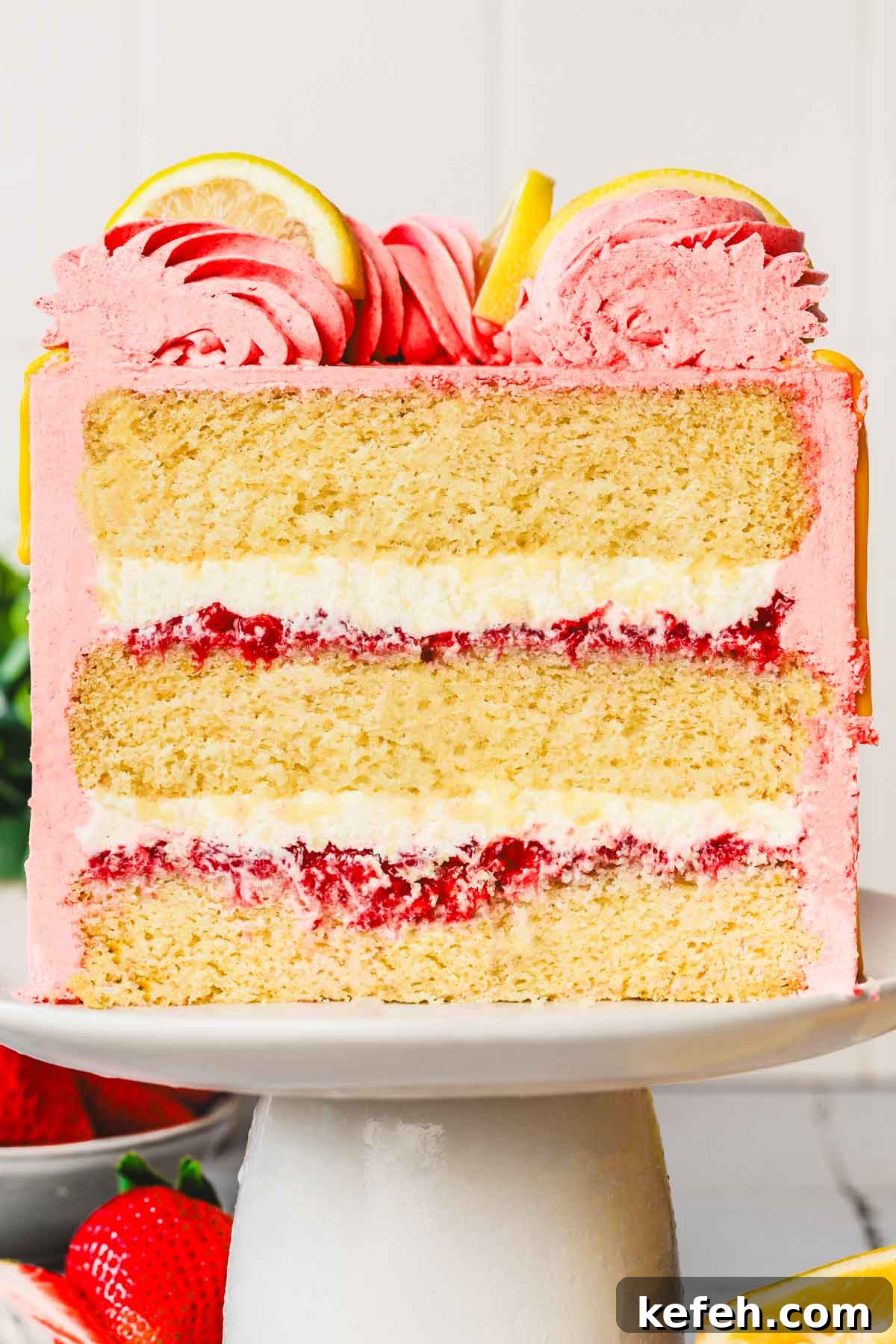
The filling matters as much as the stacking technique. It should be firm enough to support the layers while remaining pleasant to taste.
Firm fillings (very stable but richer)
- Buttercream (classic, Swiss or Italian)
- Firm ganache (especially dark or milk chocolate)
These options give a rigid, straight structure, but they can be richer and sweeter.
Softer fillings (lighter, but require care)
- Whipped ganache
- Mascarpone whipped cream
- Crème diplomate
- Fruit curd or creamy fruit inserts
These fillings are lighter and enjoyable to eat, but less stable. Chill them well before stacking and consider piping a firm border (“boudin”) around fragile fillings to keep them in place.
Preparing the sponges
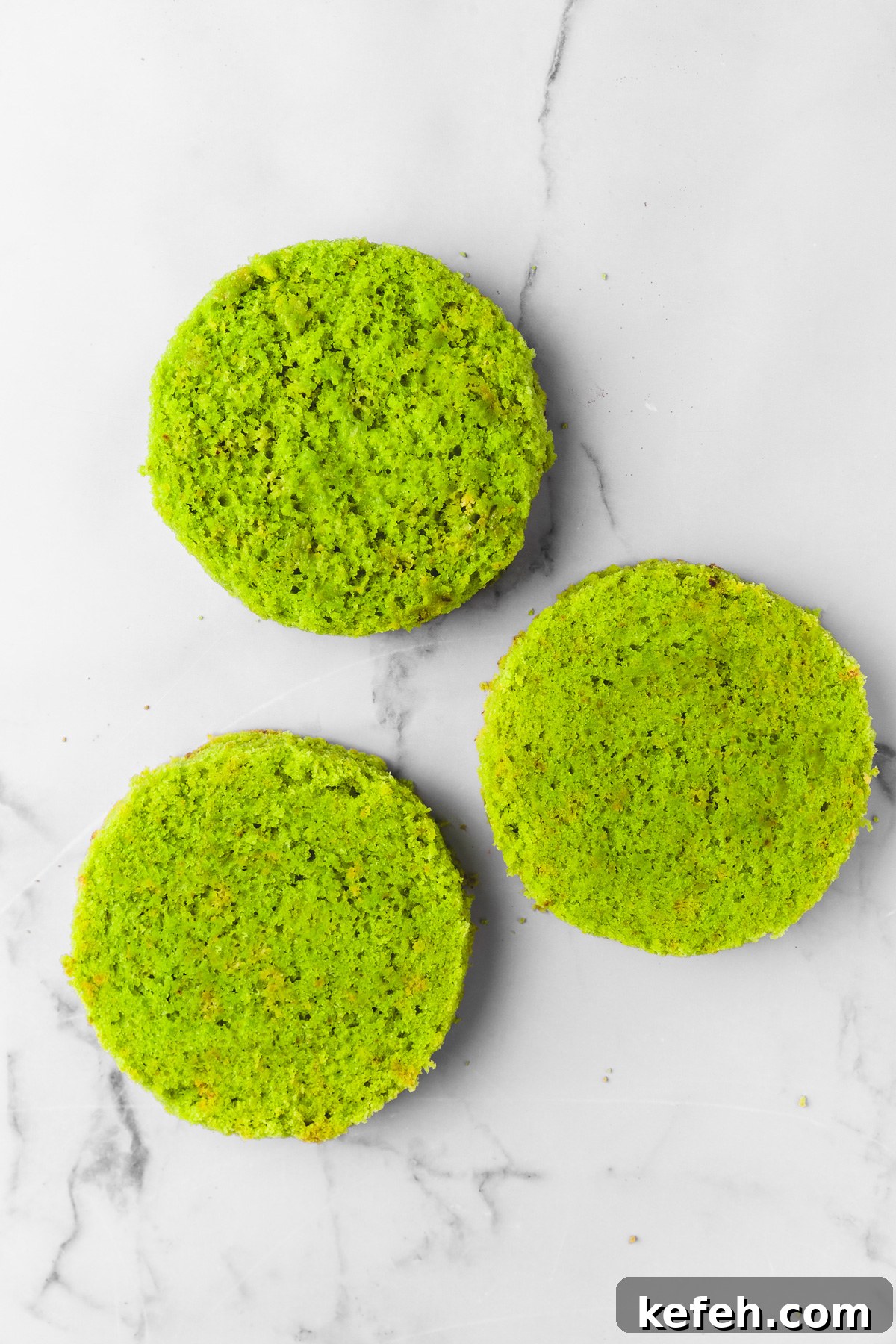
Before you assemble, make sure your sponge layers are flat and even.
- Cool completely before handling to prevent the filling from melting.
- Trim the domes with a long serrated knife or a cake leveler to create flat surfaces.
- If using one thick sponge, slice it into equal layers for a balanced cake.
- Place parchment or a non-slip mat under your cake board or acrylic disc to stop slipping while you work.
Tip: the more uniform your sponge layers are, the easier the stacking and the neater the final smoothing.
Stacking the layers step by step
- Place the first sponge: center it on a cake board or acrylic disc. It must be stable to act as a solid base.
- Spread the filling: use an angled spatula or pipe the filling for an even thickness. Smooth lightly.
- Add the next sponge: lay the second sponge on top, checking alignment and pressing gently to set it.
- Repeat: alternate filling and sponges until you reach the top layer.
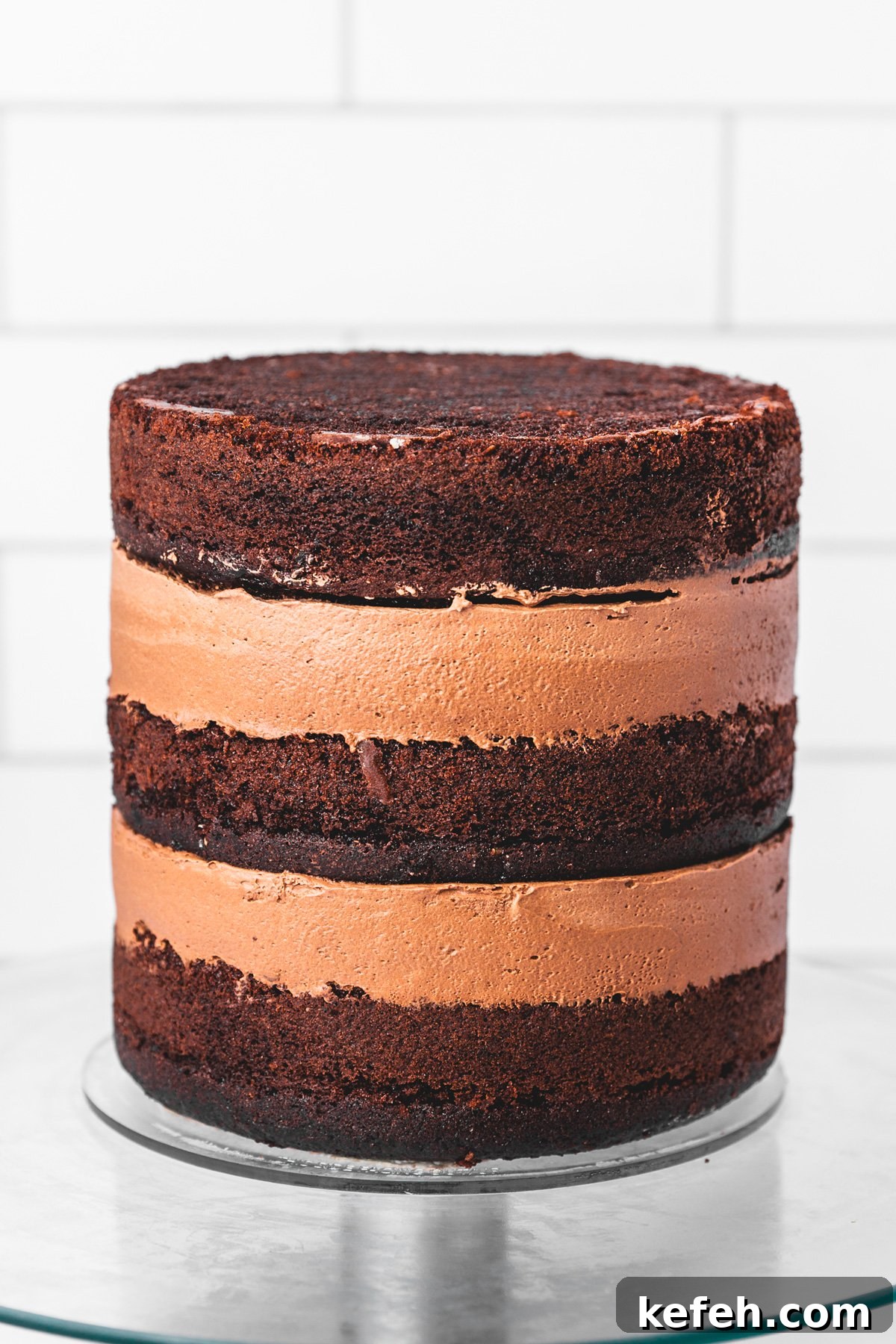
- Check alignment: view the cake from the side to ensure it remains straight and make adjustments before the filling sets.
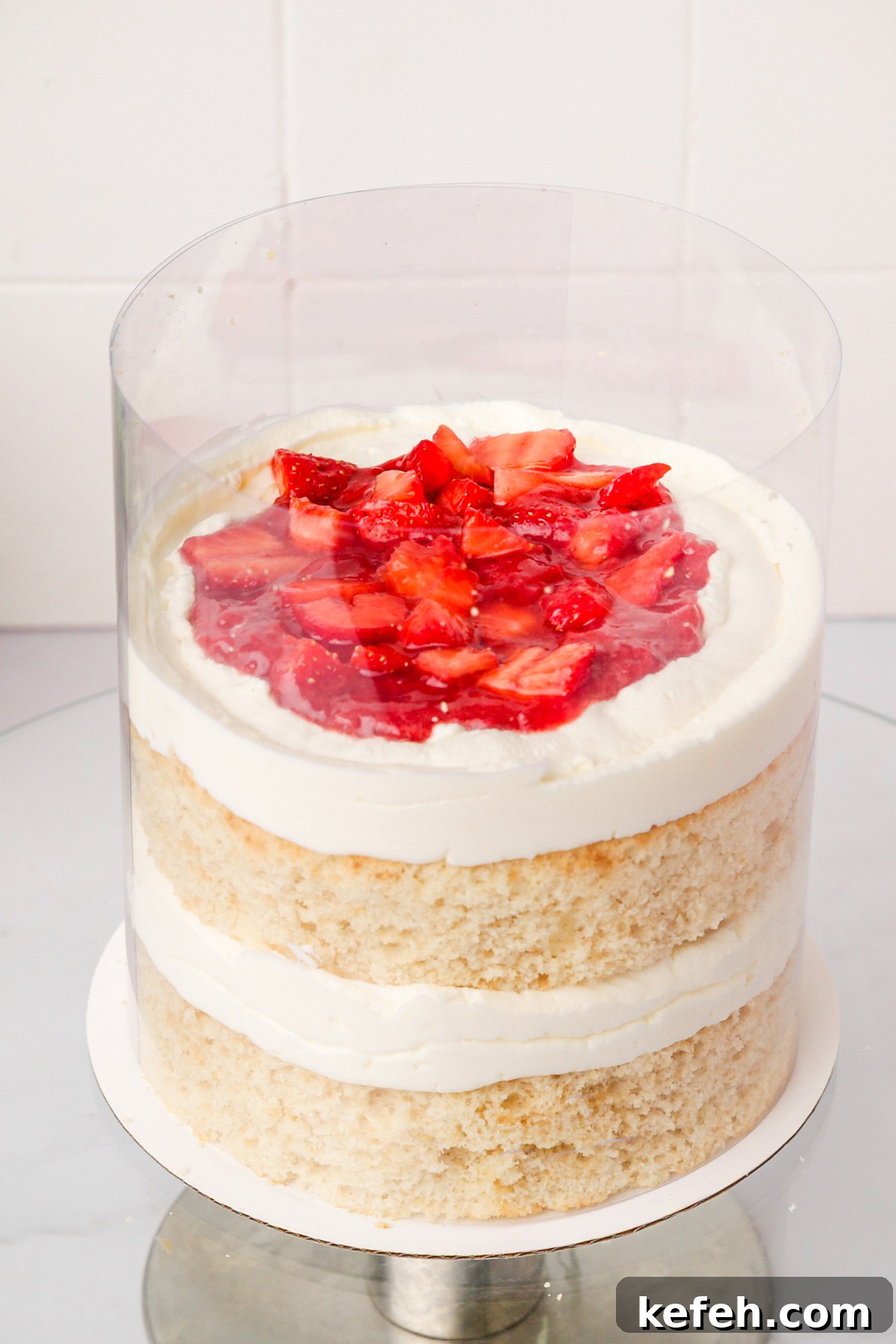
Tip: for extra stability, wrap the cake with a strip of acetate (rhodoid) or assemble it inside a tall tart ring or deep cake ring.
Contain fragile fillings with a piped border
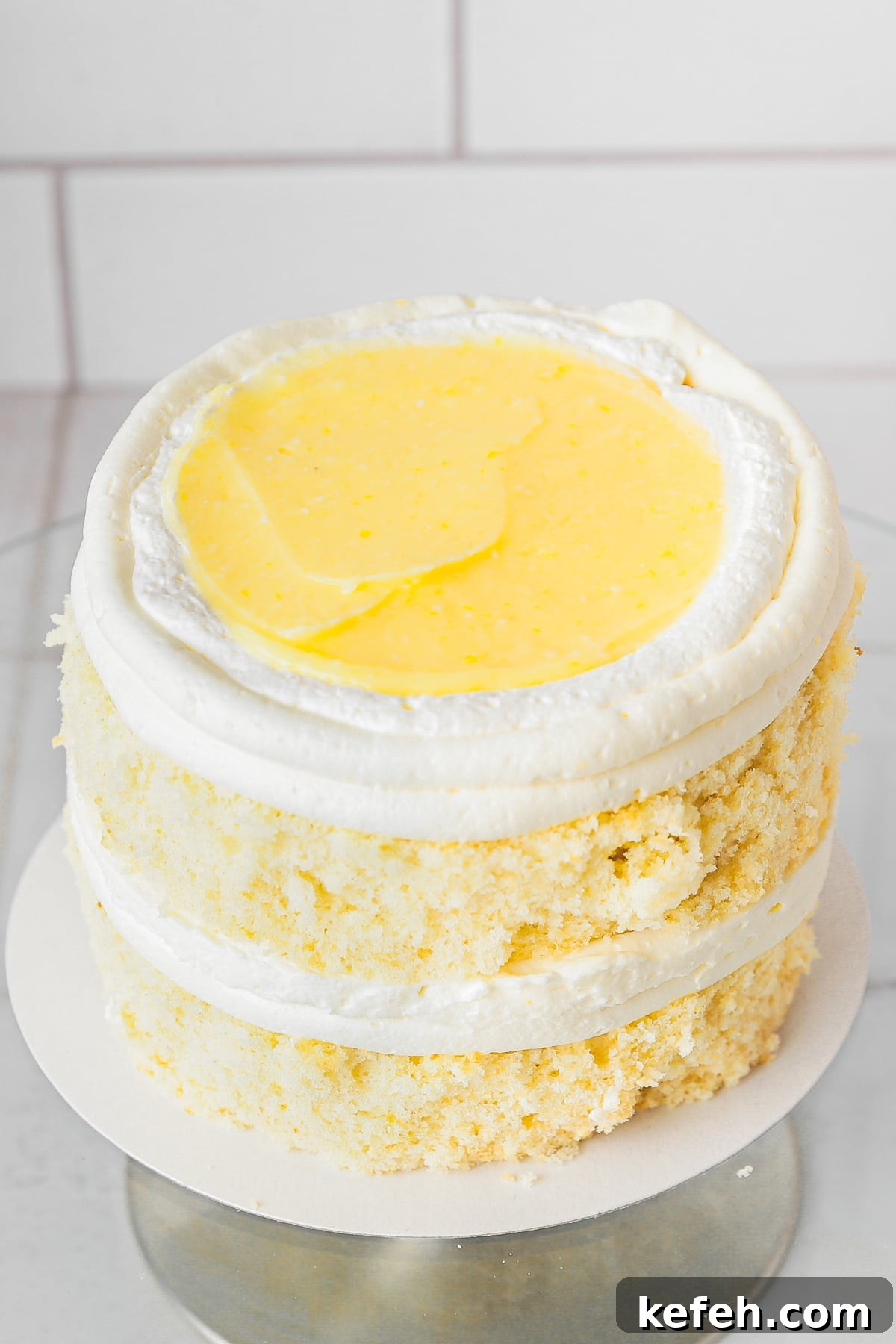
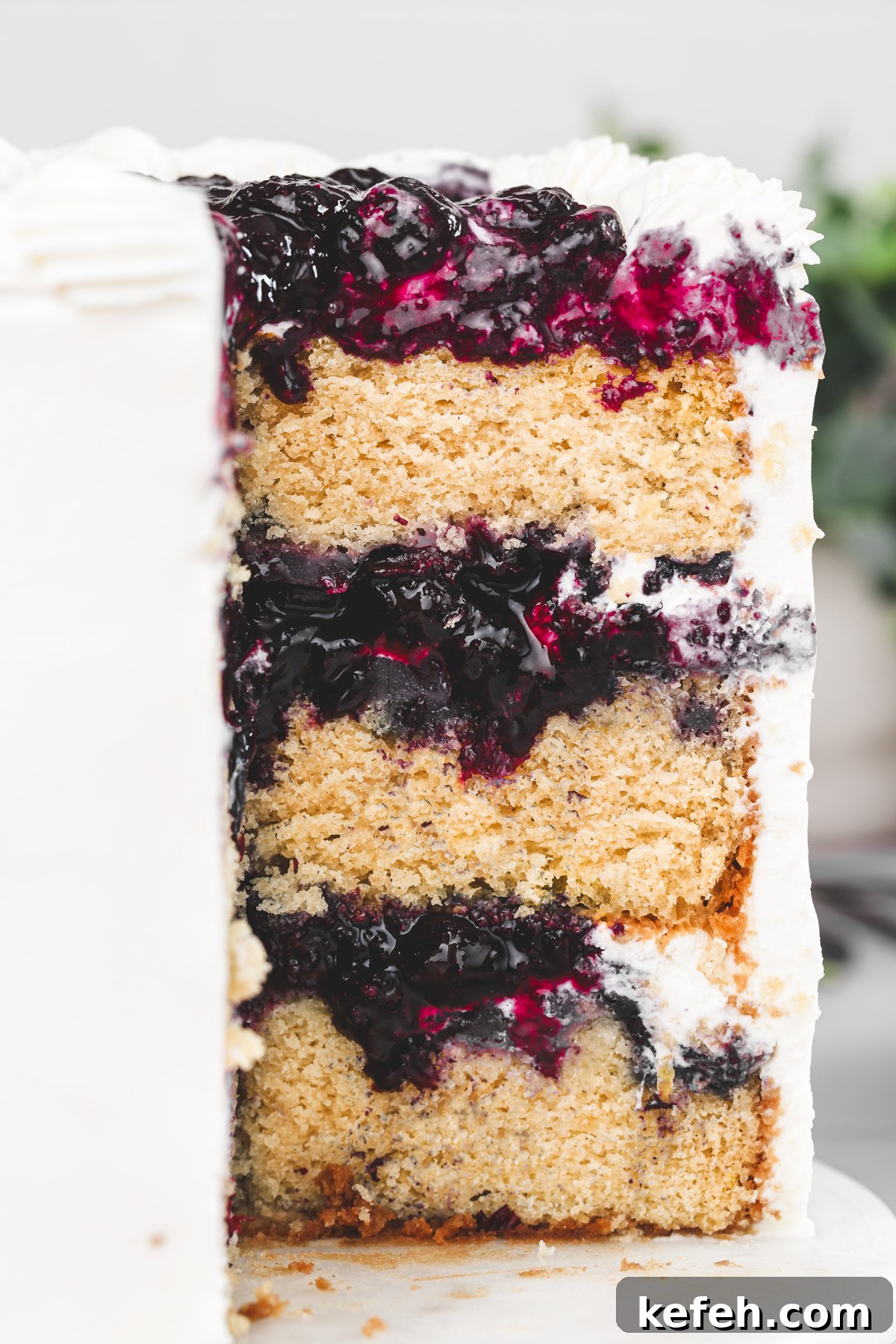
Fillings like lemon curd, fruit compotes or soft crémeux are delicious but too fluid on their own. To prevent leakage during stacking, pipe a firm border of buttercream or ganache around the edge of the sponge first.
Pipe this ring, then fill the center with the softer preparation. This simple step keeps the cake tidy and avoids spills when you smooth the sides.
Stabilize the layer cake
After stacking all layers, stabilize the cake so it keeps its shape until smoothing.
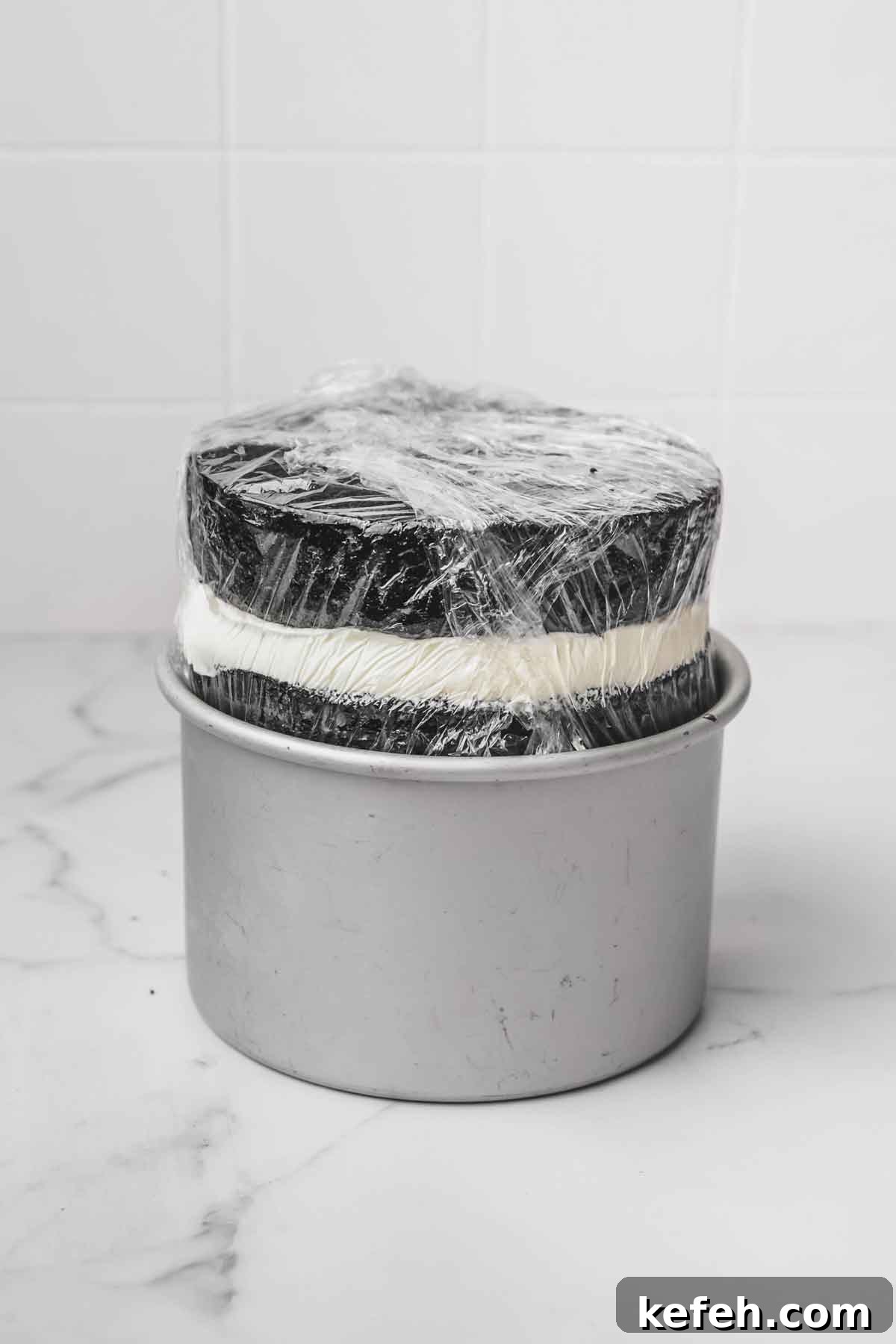
- Chill: refrigerate for at least 30 minutes (or 15 minutes in the freezer) to firm the filling and set the structure.
- Use acetate or a ring: wrap the cake to help maintain straight edges during resting.
- Internal supports: for very tall or heavy cakes, insert support dowels to prevent settling.
Tip: always check that the cake is straight before chilling — once the cream is set it’s much harder to correct.
Apply a crumb coat
Once stabilized, cover the cake with a thin layer of frosting over the sides and top. This crumb coat traps loose crumbs and strengthens the structure ahead of the final icing. Smooth quickly, then chill so the layer firms up.
The crumb coat is essential before final smoothing. After chilling, proceed with your preferred smoothing method for a clean finish.
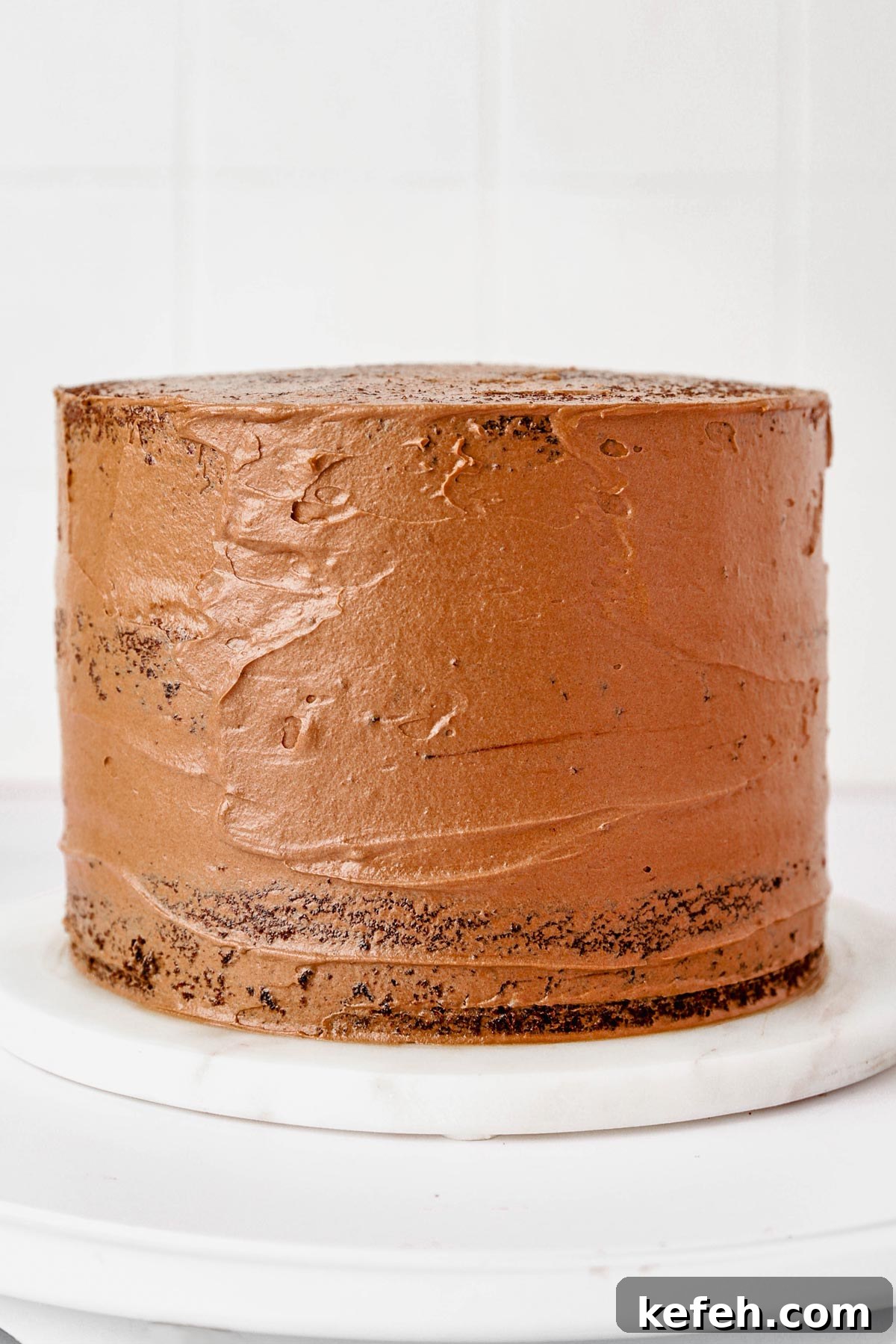
Tips for a successful assembly
- Level sponges: trim with a cake leveler or long serrated knife and always work with chilled layers.
- Prefer firm fillings: choose buttercream or ganache when possible; secure softer fillings with a piped border.
- Keep the cake straight: use acetate or a level to ensure even edges.
- Chill between steps: refrigerate between stages, especially in warm environments, to avoid slipping.
- Don’t skip the crumb coat: it locks in crumbs and makes smoothing much easier.
FAQ – Assembling a layer cake
Should I level the sponges before assembly?
Yes. Remove any domes or irregularities so each layer sits flat. Even sponges make stacking and smoothing much simpler.
Which cream should I use to fill a layer cake?
Choose a filling that holds its shape yet remains pleasant to eat: firm mascarpone whipped cream, whipped ganache, or crème diplomate are good choices. For fragile fillings (curd, compote, crémeux), pipe a firm border around the edge to secure them.
How long should a stacked layer cake rest?
About 30 minutes in the fridge or 15 minutes in the freezer is usually enough to firm the filling and stabilize the cake before crumb coating and final smoothing.
You may also like
-
Carrot Cake with Cream Cheese Frosting
-
Layer Cake: 7 Common Mistakes (and fixes)
-
Perfect Smoothing with Double Acrylic Discs
-
How to Assemble a Layer Cake

I hope this guide to assembling a layer cake was helpful! Feel free to leave a comment to share your tips or experiences — I love reading your feedback. Happy baking!