
This quick, from-scratch brown gravy is made with beef broth and thickened with a simple roux of butter and flour—no pan drippings required. Rich and savory, it’s ready in under 10 minutes and perfect for mashed potatoes, meatloaf, turkey, and holiday meals.
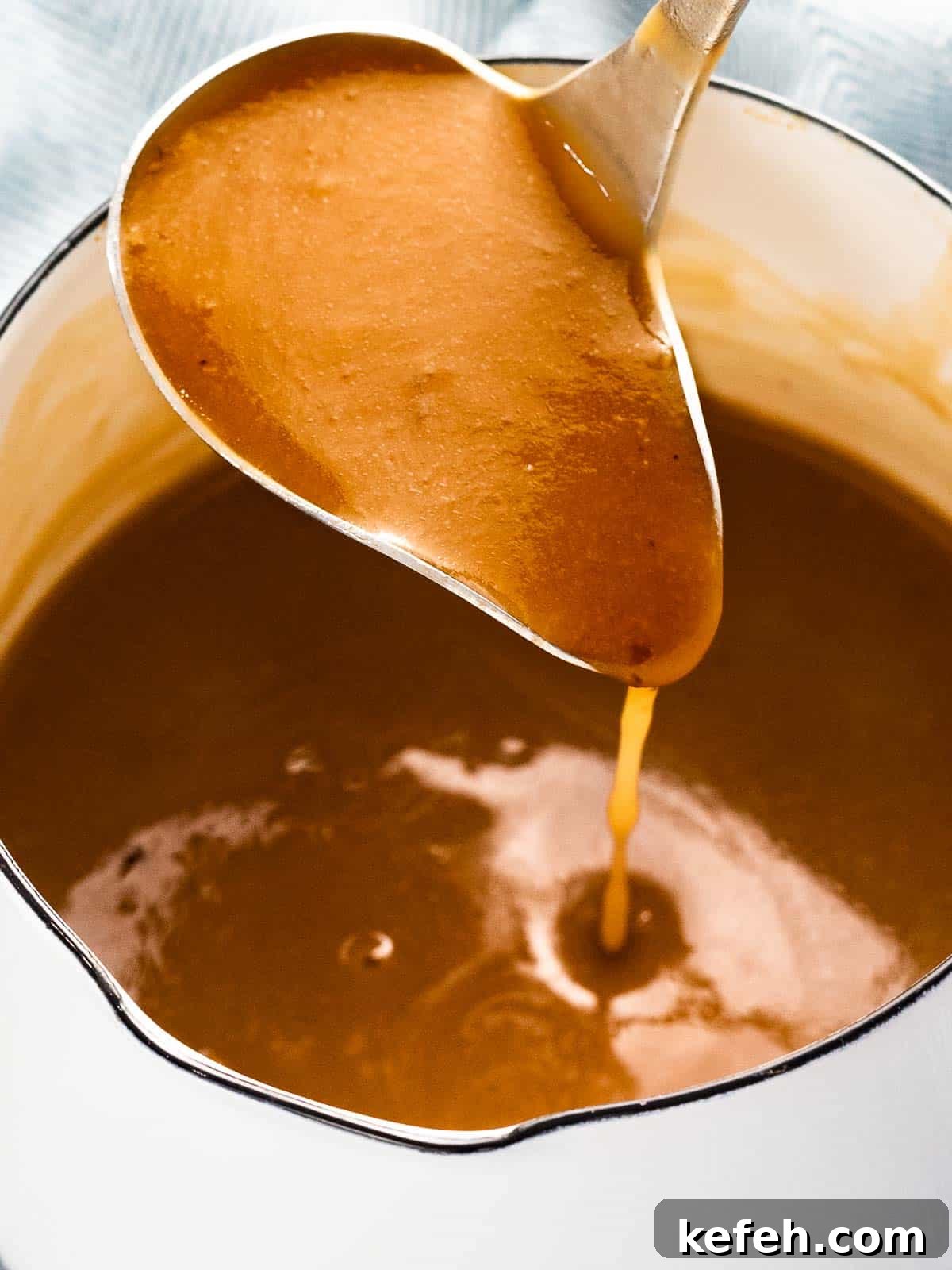
A smooth, flavorful brown gravy transforms ordinary mashed potatoes into something special. This recipe proves you don’t need drippings to make a delicious gravy—just good beef broth, a butter-and-flour roux, and a few pantry spices. It’s fast, reliable, and far superior to packaged mixes.
Whether you’re serving holiday turkey, weeknight meatloaf, Swedish meatballs, or Salisbury steak, this easy brown gravy delivers. It’s seasoned simply with garlic powder, onion powder, and an optional bay leaf or beef bouillon base for deeper flavor. Once you try it, you’ll find it’s the go-to gravy for many meals.
What Is Brown Gravy?
Brown gravy is a savory sauce traditionally made from meat drippings combined with flour to thicken and create a rich sauce. When drippings aren’t available, you can recreate that same savory depth using beef broth or stock, a roux of butter and flour, and well-chosen seasonings.
Brown Gravy vs. White Gravy
Brown gravy is typically made with beef-based liquids and has a deeper color and beef-forward flavor. White gravy—also called country or cream gravy—is made with milk or cream and is lighter in color and flavor. Brown gravy commonly accompanies beef, turkey, and mashed potatoes, while white gravy pairs with biscuits, fried chicken, and chicken-fried steak.
Roux vs. Cornstarch Slurry: Two Ways to Thicken Brown Gravy
You can thicken gravy with either a roux or a cornstarch slurry. Both methods work, but they give different textures and flavors. A roux yields a silkier, more complex gravy, while a slurry is a quick, gluten-free option.
What Is a Roux?
A roux is a cooked blend of fat (usually butter) and flour. Melt the butter, whisk in the flour, and cook briefly. A light roux thickens well; cooking it longer deepens the color and adds a subtle toasted, nutty flavor.
Why Use a Roux?
A roux creates a velvety texture that clings to potatoes and meat, and imparts a complexity you don’t get from cornstarch. It’s often the difference between homemade and restaurant-style gravy.
What Is a Cornstarch Slurry?
A cornstarch slurry is cornstarch mixed with cold water and stirred into hot liquid near the end of cooking. Use this when you need a gluten-free gravy or want a faster method—just heat your broth, season, then thicken with the slurry.
Ingredients for Brown Gravy
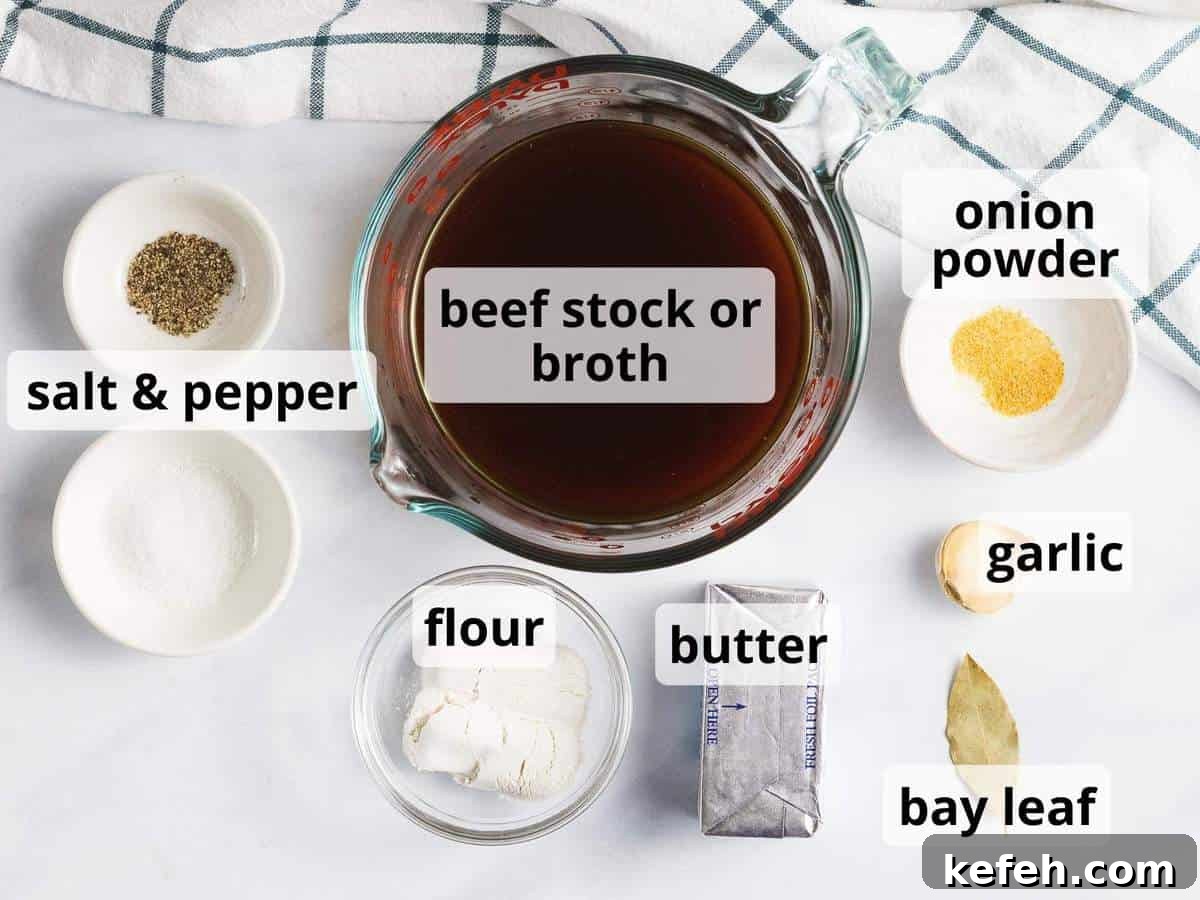
To make this no-drippings brown gravy, you’ll need:
- Beef broth or stock – the flavor base; choose a good-quality product.
- All-purpose flour – combined with butter to form the roux and thicken the gravy.
- Butter – provides richness and the fat for the roux.
- Garlic powder – for savory depth.
- Onion powder – adds subtle sweetness and balance.
- Bay leaf (optional) – adds a mild herbal note while simmering.
- Beef bouillon base (optional) – concentrates beef flavor when you don’t have drippings; add carefully since it’s salty.
- Salt & pepper – to taste.
How to Make Brown Gravy from Scratch
From start to finish this gravy takes about 8–10 minutes.
Step 1: Make the Roux
Melt the butter in a saucepan over medium heat. Stir in the flour and whisk continuously for about 2 minutes until a smooth paste forms and the raw flour taste is gone. Cook a bit longer if you want a darker, more flavorful roux.
Step 2: Add Broth and Seasonings
Slowly pour in about half the beef broth while whisking to prevent lumps. When smooth, add the remaining broth along with garlic powder, onion powder, and optional beef bouillon base and bay leaf.
Step 3: Simmer and Finish
Bring the gravy to a boil, then reduce heat and simmer for about 3 minutes until it thickens and becomes silky. Remove the bay leaf, taste, and adjust salt and pepper. If it’s too thick, whisk in a splash of broth until you reach the desired consistency.
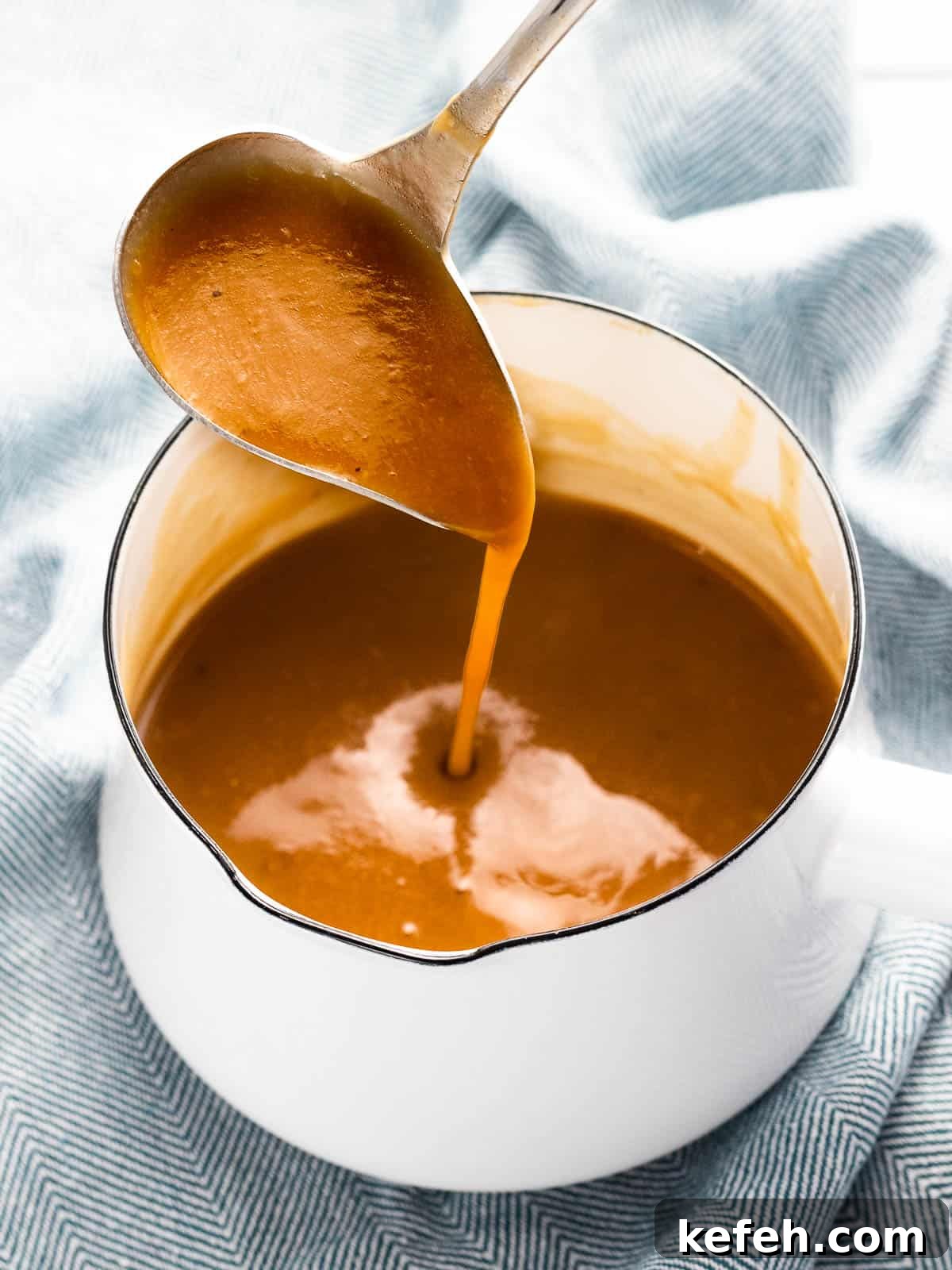
Tips for the Best Homemade Brown Gravy
Don’t rush the roux. Cook it long enough to eliminate any raw flour flavor.
Add broth slowly. Gradual addition and vigorous whisking prevent lumps.
Use warm broth. Room-temperature or slightly warmed broth incorporates more easily into the hot roux.
Taste before salting. If you used a beef bouillon base, it may already provide enough salt.
Add a splash of Worcestershire sauce. About ½ teaspoon enhances umami and mimics drippings.
Strain if needed. If lumps form, pass the gravy through a fine-mesh sieve for a smooth finish.
Brown Gravy Variations
Try these easy variations once you’ve mastered the base:
Mushroom Brown Gravy – Stir in sautéed mushrooms while the gravy simmers for a savory, meaty topping.
Gluten-Free Brown Gravy – Skip the roux and whisk in a cornstarch slurry (cornstarch mixed with cold water) to thicken.
Herb-Infused Gravy – Simmer with fresh rosemary, thyme, or sage, then remove herbs before serving—great for holiday poultry.
Poultry Gravy – Swap beef broth for chicken or turkey broth for a lighter gravy suited to poultry.
Ways to Serve Brown Gravy
This versatile gravy pairs well with many dishes:
- Mashed potatoes – a classic combination.
- Meatloaf – ladled generously over slices.
- Pork chops – rich and comforting.
- Loco Moco – over rice and a burger patty with a fried egg.
- Poutine – poured over fries with cheese curds.
- Meatballs – for a hearty, saucy finish.
- Roasted turkey or chicken – ideal for holiday plates.
- Salisbury steak – classic pairing.
- Biscuits – for a heartier biscuits-and-gravy option.
How to Store and Reheat Brown Gravy
Refrigerator: Keep in an airtight container for up to 3 days; it will thicken as it cools.
Freezer: Freeze in a freezer-safe container for up to 3 months—leave room for expansion.
Reheating: Warm gently on the stovetop over medium-low, stirring occasionally. Thin with a little beef broth if needed. Microwaving in 30-second intervals while stirring also works.

Frequently Asked Questions
Brown gravy is made from beef broth or stock thickened with a roux (butter and flour) or a cornstarch slurry and seasoned with spices like garlic and onion powder. Traditional versions use pan drippings, but this recipe substitutes quality broth and optional bouillon for the same savory depth.
Use beef broth as your base and thicken with a butter-and-flour roux. A small amount of beef bouillon base or a splash of Worcestershire sauce can boost the meaty flavor.
Add broth gradually while whisking vigorously. Using warm broth and a whisk helps, and you can strain the gravy if lumps form.
Yes. Store in the refrigerator for up to 3 days and reheat on the stovetop, thinning with broth if necessary.
Yes. Freeze in a suitable container for up to 3 months. Thaw overnight in the fridge before reheating.
Cook the roux a bit longer until golden-brown, use beef stock instead of broth, add a teaspoon of beef bouillon base, or a small amount of Worcestershire or dark soy sauce for extra color and depth.
You can, but the gravy will be lighter in color and flavor. For a rich, classic brown gravy, beef broth is recommended.
Thanks for reading—enjoy the gravy! – Jamie
More sauce recipes:
- Easy Mushroom Gravy
- Vegan Mushroom Gravy
- Easy Au Jus (No Drippings Needed)
- Remoulade Sauce (Crab Cake Sauce)
- Tonkatsu (Katsu) Sauce
- Sweet and Tangy Soy Glaze

Easy Homemade Brown Gravy (No Drippings)
Ingredients
- 3 cups beef broth or stock
- 6 tablespoons all-purpose flour
- 3 ½ tablespoons butter
- ½ teaspoon garlic powder
- ½ teaspoon onion powder
- Salt and pepper, to taste
- 1 teaspoon beef bouillon base (optional)
- Bay leaf (optional)
To Make a Darker Brown Gravy
- ¼ teaspoon Kitchen Bouquet Browning & Seasoning Sauce (optional)
Instructions
- Make the roux: Melt butter in a large saucepan over medium heat. Whisk in the flour and cook about 2 minutes until a smooth paste forms and it turns lightly golden.
- Add broth and seasonings: Slowly whisk in half the beef broth to prevent lumps. When smooth, add the remaining broth, garlic powder, onion powder, bouillon base (if using), and bay leaf. For a darker color, add the browning sauce sparingly.
- Simmer and finish: Bring to a boil, then simmer 3 minutes until thick and smooth. Remove the bay leaf, taste, and season with salt and pepper. Serve immediately.
Notes
Makes about 3 cups of gravy.
Storage: Refrigerate up to 3 days or freeze up to 3 months. Reheat gently and thin with broth if needed.
Flour: Use one tablespoon less for a thinner gravy. For gluten-free, use a cornstarch slurry (3 tbsp cornstarch + 3 tbsp cold water) added to simmering broth instead of a roux.
Bouillon base: Adds depth without drippings; it contains salt so add cautiously and taste as you go.
Flavor boosters: Try ½ teaspoon Worcestershire sauce, a splash of soy sauce, or fresh herbs while simmering.
Nutrition
Carbohydrates: 8 g,
Protein: 3 g,
Fat: 9 g,
Sodium: 745 mg
Nutrition information is an approximation.
Like this? Leave a comment below!