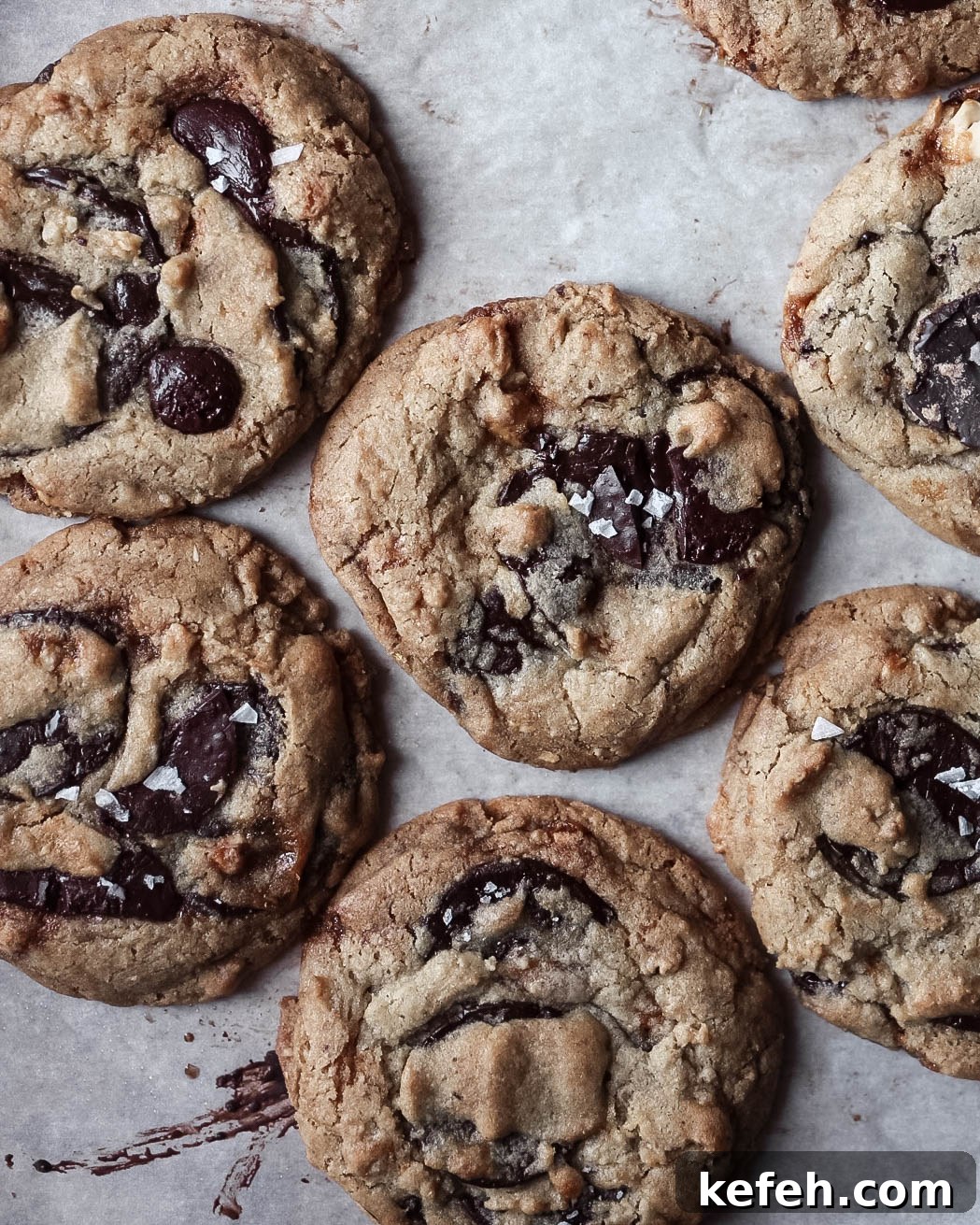
A handful of baking bloggers continually inspire me with inventive flavor combinations and smart takes on classic pastries. Claudia Brick of The Brick Kitchen is one such baker; her salted coffee caramel macadamia white chocolate brioche scrolls inspired one of the earliest recipes on this blog. Her photography and aesthetic drew me in long before I tried her recipes.
Another consistent source of inspiration is Thalia Ho of Butter and Brioche. Months ago I was intrigued by her Hazelnut Praline and Rye Chocolate Chunk Cookies. What stood out was the use of melted butter in the dough, which is unusual for chocolate chunk cookies. I made a batch and loved the hazelnut-chocolate-rye flavor but wanted more texture, caramelization, and depth—essentially the characteristics of the famous Jacques Torres cookie, but with rye and hazelnut praline added.
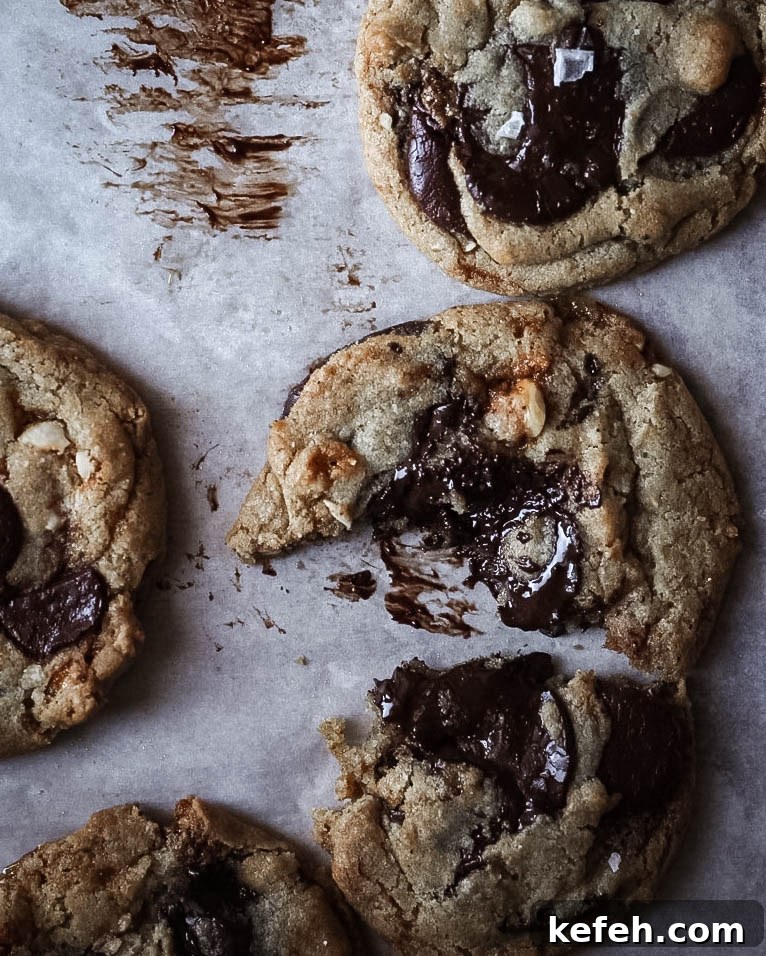
If you haven’t encountered it, Jacques Torres created a legendary chocolate chip cookie that behaves more like a chocolate layer cookie: chocolate discs or feves melt into thick, molten chocolate layers. The technique that sets it apart is allowing the dough to rest in the refrigerator for 24–72 hours before shaping and baking. This resting time helps the ingredients meld, leading to deeper caramelization and more complex flavor in the baked cookie.
The recipe below is adapted from David Leite’s New York Times version of the Jacques Torres-style cookie, with my own adjustments. I’ve retained the combination of bread flour and cake flour used in that adaptation but reduced the amounts slightly and added a generous portion of rye flour. Some bakers substitute 12 ounces of all-purpose flour for the bread/cake flour mix with good results, and that variation will work if you prefer a simpler flour list. I personally prefer the texture and bite the bread flour/cake flour combo provides, so I kept it.
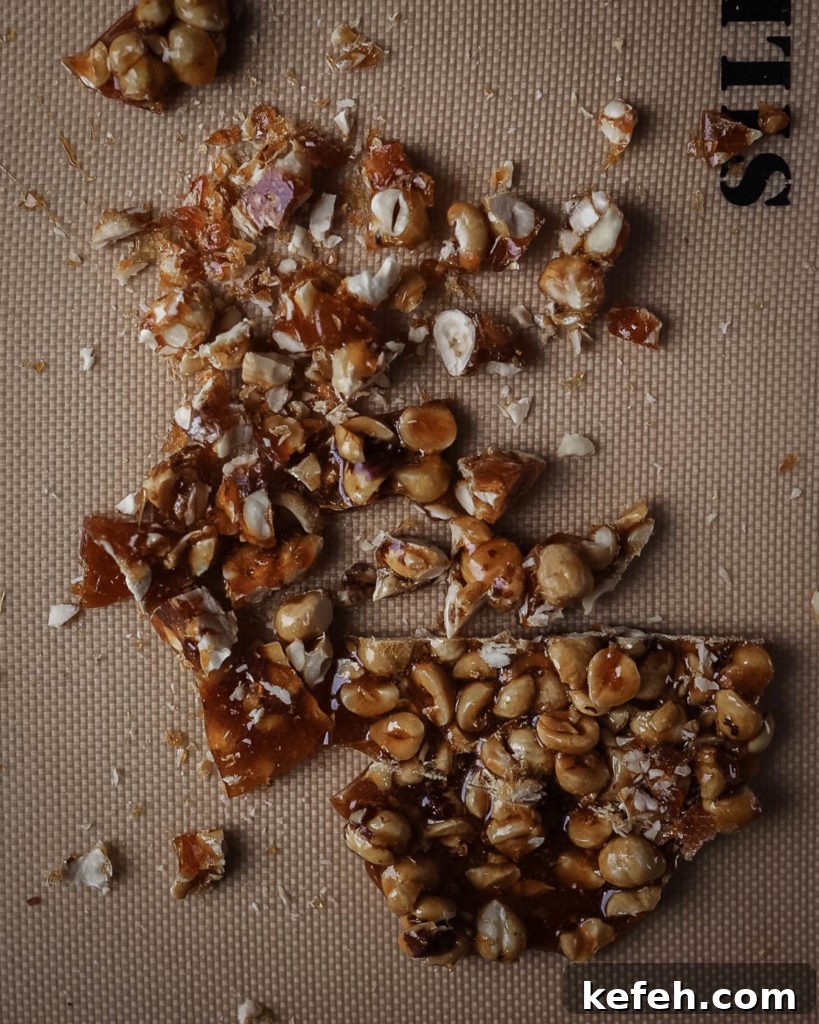
The hazelnut praline here is a straightforward caramelized nut: a “cheater’s caramel” made with a touch of corn syrup to help prevent crystallization. Don’t be intimidated by the word “caramel.” Making a basic praline is quick and simple once you try it.
One technique borrowed from Thalia’s approach is “pan-banging,” a tip popularized by Sarah Kieffer. Halfway through baking, open the oven and firmly—but carefully—bang the cookie sheet against the oven rack. This helps the melting chocolate discs spread into luscious pools. It sounds odd but yields impressive, glossy chocolate puddles.
Two elements are essential: use good bittersweet or dark chocolate (discs or feves are ideal), and let the dough rest in the refrigerator for at least 24 hours, preferably 36. The wait is worth it—this aging is key to the cookie’s texture and flavor.

Chocolate Chunk, Rye, and Hazelnut Praline Cookies
Adapted from David Leite in the New York Times Food section. Inspired by Thalia Ho.
Dessert
chocolate chip cookies, chocolate chunk cookies, chocolate chunk hazelnut praline cookies, rye chocolate chip cookies
Ingredients
For the hazelnut praline
-
2/3
cup
toasted, skinned, chopped hazelnuts -
1/2
cup (100 g / 3.5 oz)
sugar -
1
tsp
light corn syrup -
2
tbsp
water -
pinch
salt
For the cookies
-
6
oz.
cake flour -
6
oz.
bread flour -
5
oz.
rye flour -
1 1/4
tsp
kosher salt -
1 1/4
tsp
baking soda -
1 1/2
tsp
baking powder -
10
oz
unsalted butter
at room temperature -
10
oz
light brown sugar -
8
oz
granulated sugar -
2
large eggs -
2
tsp
vanilla extract -
1
lb.
bittersweet chocolate discs or feves
– plus a handful extra for the tops of the cookies - flaky sea salt
Instructions
Make the hazelnut praline:
-
Line a baking sheet with a silicone mat or parchment paper.
-
In a heavy skillet or saucepan, combine the sugar, corn syrup, and water. Cook over medium-high heat without stirring until the mixture begins to color.
-
Swirl the pan (do not stir) and continue cooking, swirling occasionally, until the caramel reaches an even deep amber color. This only takes a few minutes.
-
Remove from heat and quickly stir in the chopped hazelnuts and a pinch of salt with a silicone or rubber spatula. Turn the mixture onto the lined baking sheet and spread it into an even layer.
-
Let the praline cool and harden, then transfer it to a cutting board and chop into small pieces with a sharp knife.
Make the cookie dough:
-
Sift the cake flour, bread flour, rye flour, baking soda, and baking powder into a medium bowl. Whisk in the salt and set aside.
-
In a stand mixer fitted with the paddle attachment, cream the room-temperature butter with the brown sugar and granulated sugar until light and fluffy. Add the eggs one at a time, beating well after each, then mix in the vanilla.
-
With the mixer on low, add the flour mixture and mix just until combined—this should take only about 10 seconds.
-
Add the chocolate discs and chopped hazelnut praline and mix on low briefly to distribute. Turn off the mixer, remove the bowl, and use a sturdy spatula to finish folding everything together.
-
Cover the bowl with plastic wrap and refrigerate for at least 24 hours, preferably 36, and up to 72 hours.
-
When ready to bake, preheat the oven to 350°F and line two baking sheets with parchment or silicone mats. Scoop 6–8 mounds of dough (about 70 g each) onto the first sheet. If you like extra glossy chocolate puddles, press an extra chocolate feve or two into the top of each mound. Repeat on the second sheet.
-
Bake the first sheet for approximately 18–20 minutes. Halfway through, open the oven and, using oven mitts, firmly but carefully bang the baking sheet against the oven rack to help the chocolate spread. Close the oven and repeat the bang one minute later, then repeat two more times at one-minute intervals (four bangs total). When the cookies are golden and the chocolate is molten, remove them from the oven, sprinkle flaky sea salt over the chocolate puddles, and let the cookies rest on the pan for 5 minutes before transferring to a wire rack to cool completely.
-
Bake the second sheet following the same process.
-
With remaining dough, you can bake additional batches over the next couple of days, scoop and freeze portions for later baking, or freeze baked cookies. Allowing the dough to age in the refrigerator before baking gives the best results; freezing immediately after mixing yields a less developed flavor.
Recipe Notes
- You can substitute 12 ounces of all-purpose flour for the bread/cake flour mix if you prefer a simpler approach, though many bakers enjoy the texture the flour combination provides.
- The 24–72 hour refrigeration period allows moisture and flavors to meld and promotes better caramelization during baking, which deepens the cookie’s flavor.
- Once the dough has rested, you can scoop and freeze portions for convenient future baking. Freezing immediately after mixing produces less depth of flavor than refrigerated aging.
- Baked cookies freeze well for later enjoyment.