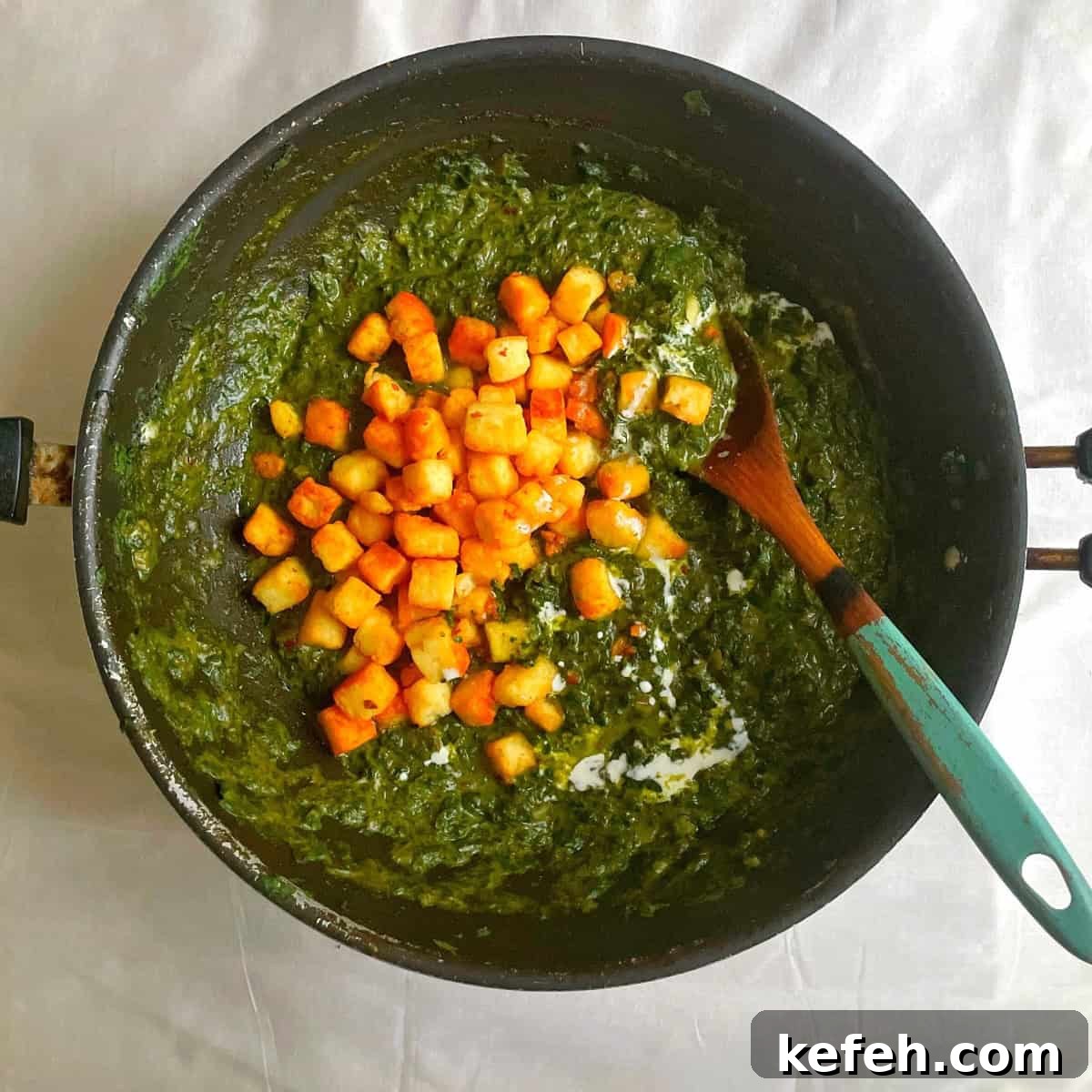
Dishes like Saag Paneer might not be familiar from childhood meals for many Pakistanis. Paneer wasn’t a regular in my family kitchen — it’s far more common in India than in Pakistan. I remember the first time I truly enjoyed paneer was at my Walima, as part of a delicious Chilli Paneer. Since then I’ve been a fan.
Paneer is a salt-free, non-melting fresh cheese. When heated it softens and becomes moreish, but its texture and mild flavour don’t appeal to everyone. My husband, for example, often skips paneer dishes. If you do enjoy it, though, this Saag Paneer will be right up your alley.
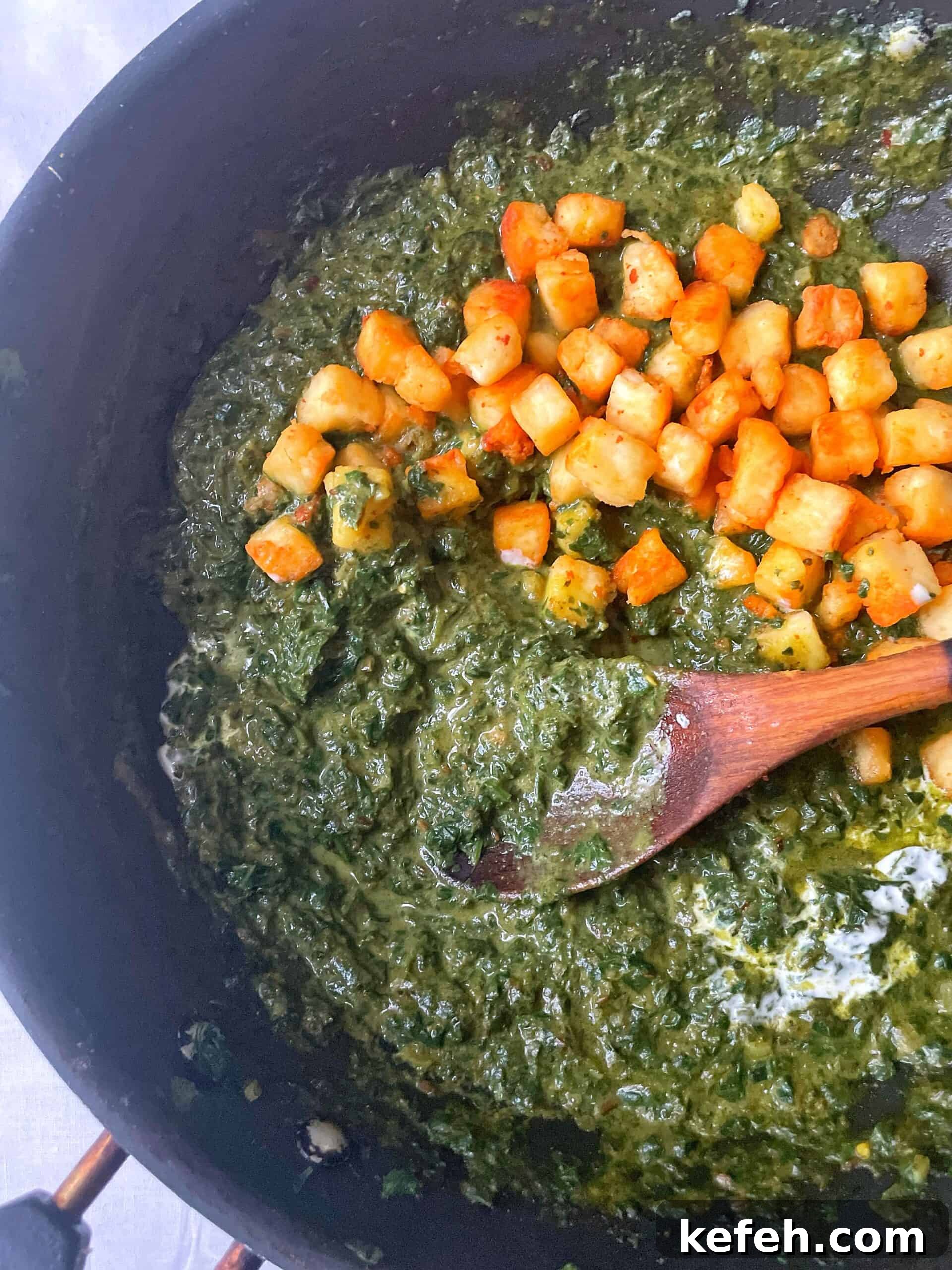
This version of Saag Paneer is tasty, quick and simple — ideal for busy evenings or cooks who prefer straightforward recipes over elaborate preparations.
[feast_advanced_jump_to]
🌿 What is Saag Paneer?
Saag Paneer is a hearty Punjabi dish that’s more prevalent in North India than in Pakistan. It combines paneer (a firm fresh cheese similar to halloumi) with leafy greens, most commonly spinach, and is gently spiced and finished with cream or butter.
Traditionally saag was made with mustard leaves (sarson ka saag). Spinach became more commonly used outside the subcontinent because it’s easier to source. You can make saag from a range of greens — mustard leaves, fenugreek, spring greens, Swiss chard, arugula and more — either alone or in combination.
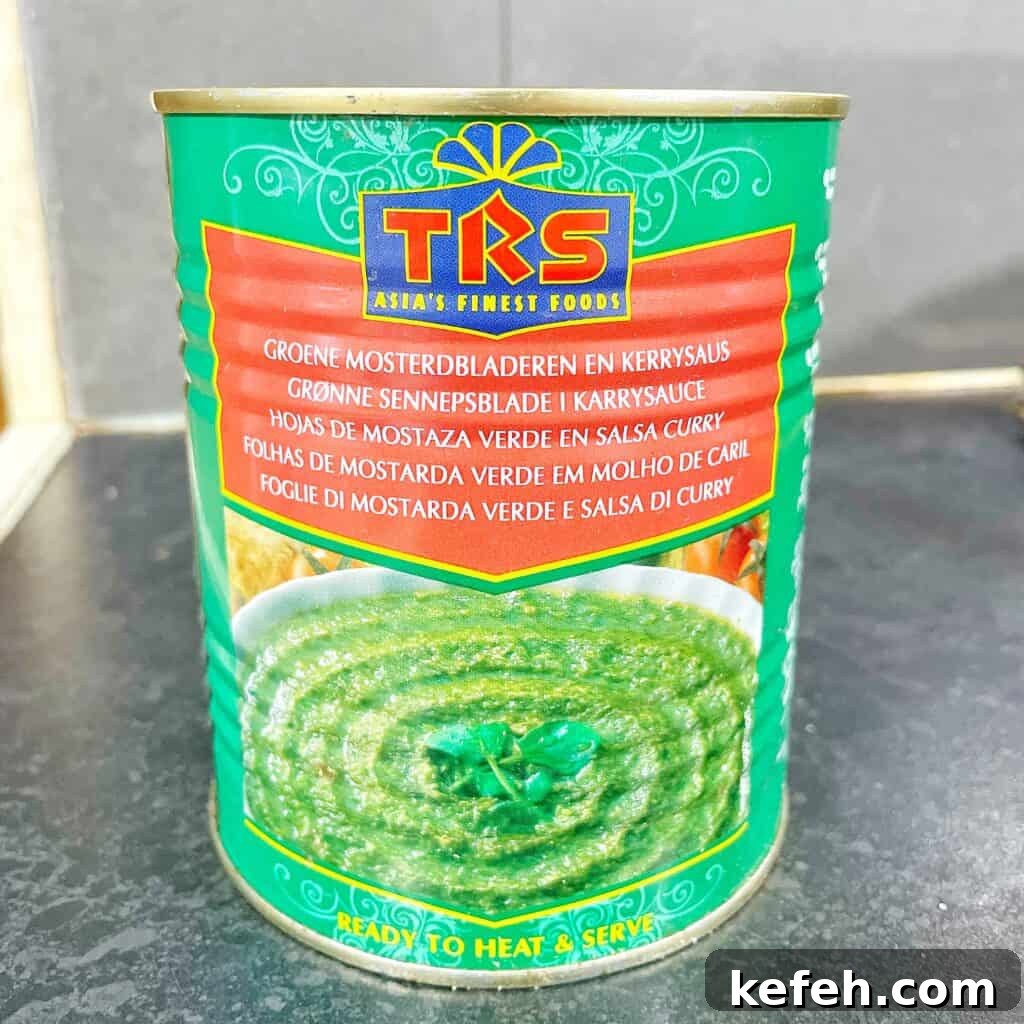
Saag Paneer is a popular option on British Indian takeaways alongside favourites like Chicken Korma and Chicken Karahi. Many recipes still call for spinach, although pre-cooked tinned pureed mustard leaves are widely available and convenient.
Vegetarian and gluten-free, Saag Paneer can also be low-carb or diabetic-friendly if paired with an appropriate accompaniment.
🤔 What’s the difference between Saag Paneer and Palak Paneer?
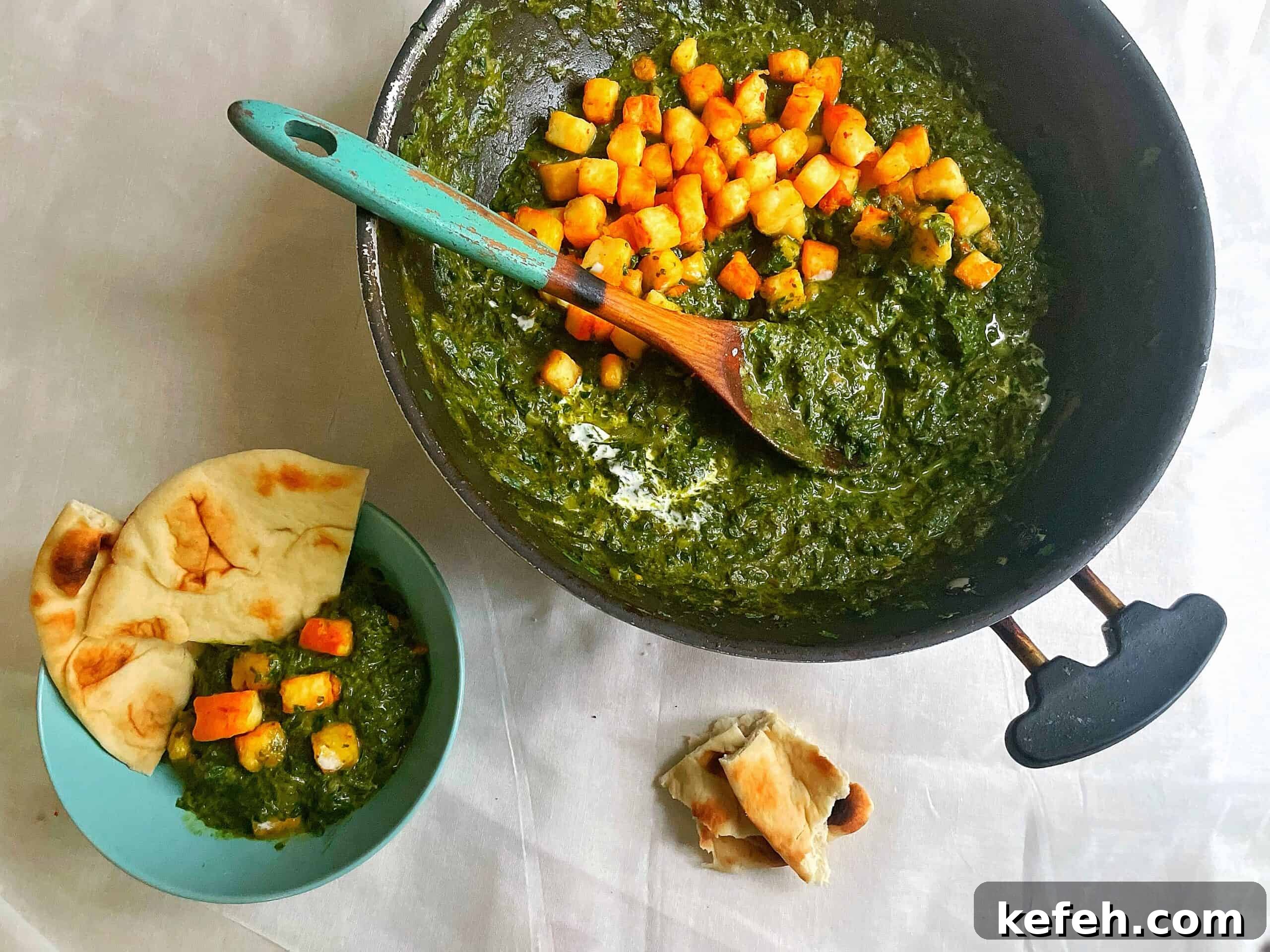
In Hindi/Urdu, saag typically refers to mustard greens while palak means spinach. Palak Paneer uses only spinach; Saag Paneer may use a mix of greens such as mustard leaves, fenugreek and spinach. In the recipe card below you’ll find an option to use mixed greens or just spinach — I used spinach here due to availability, but a mix often adds more depth of flavour.
I have an older Palak Paneer recipe on the blog with a similar method, though the photos there are dated.
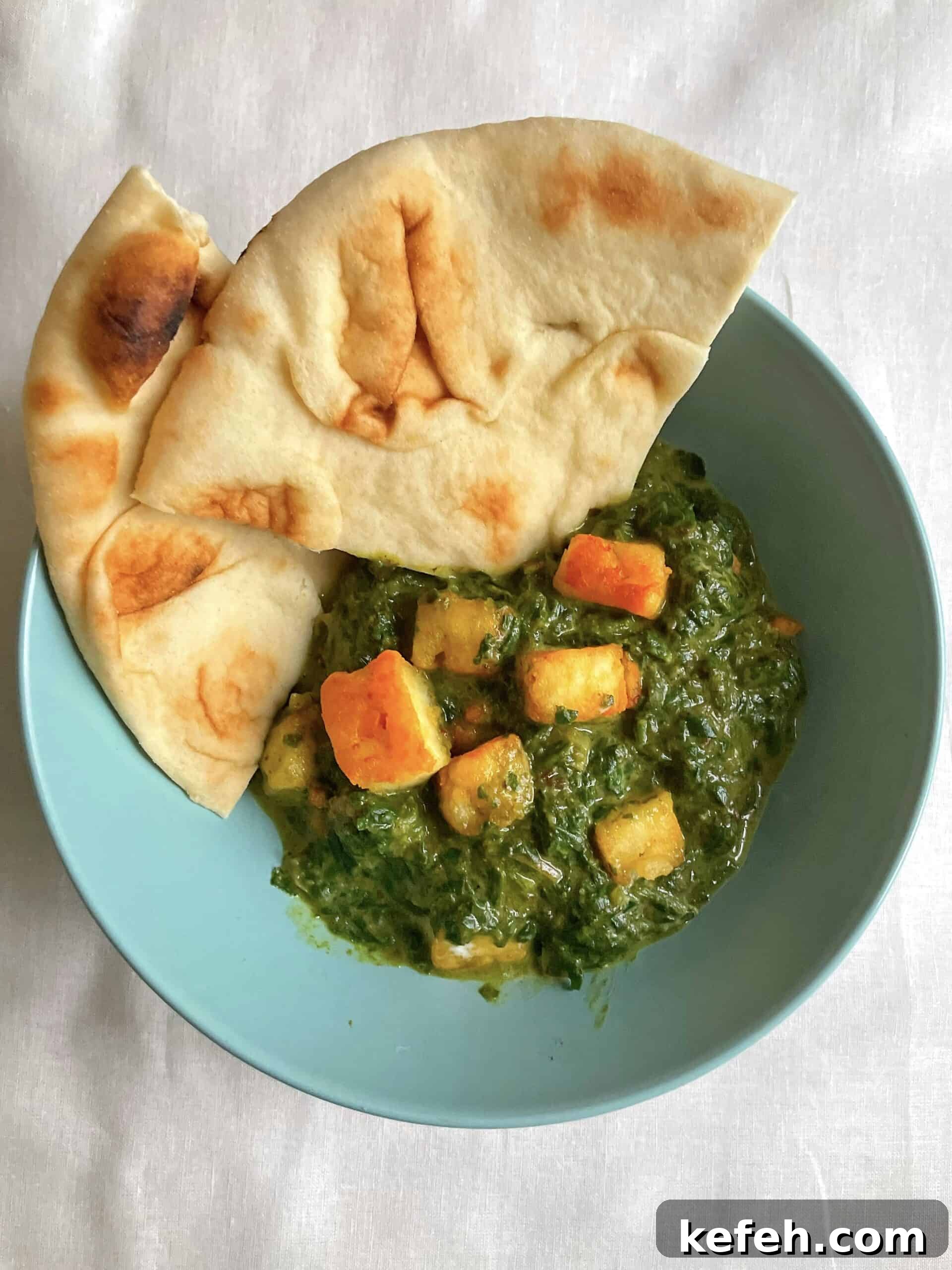
📃 Saag Paneer Ingredients
This Saag Paneer is quick and relies on just a few ingredients by South Asian cooking standards. You’ll need:
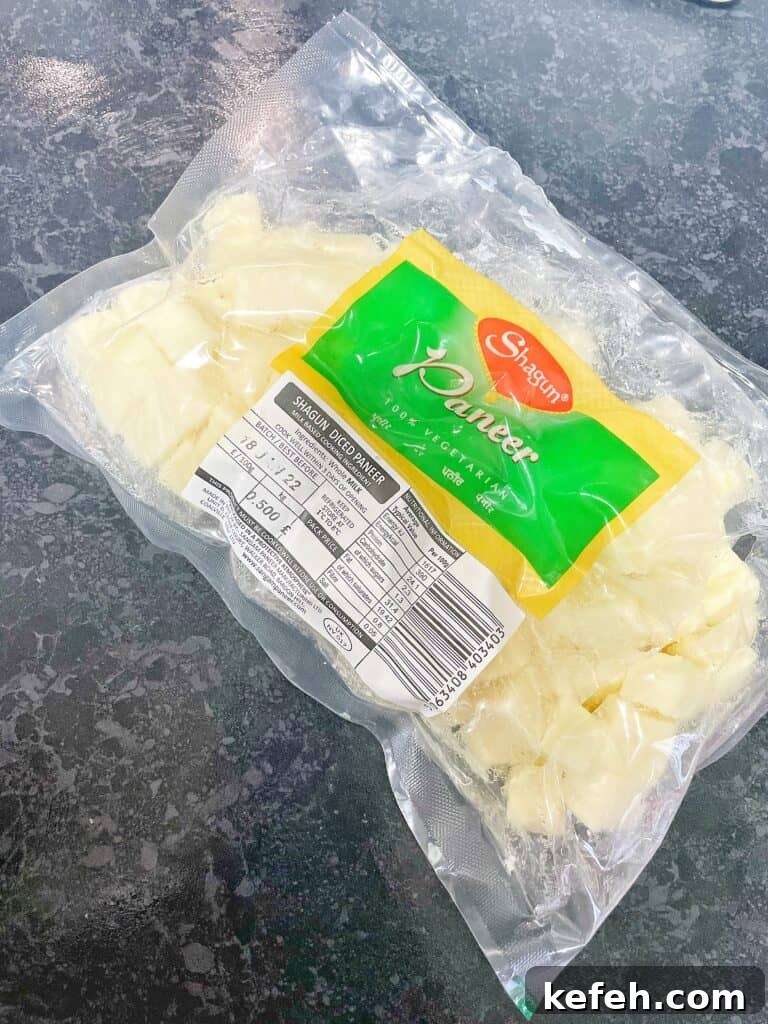
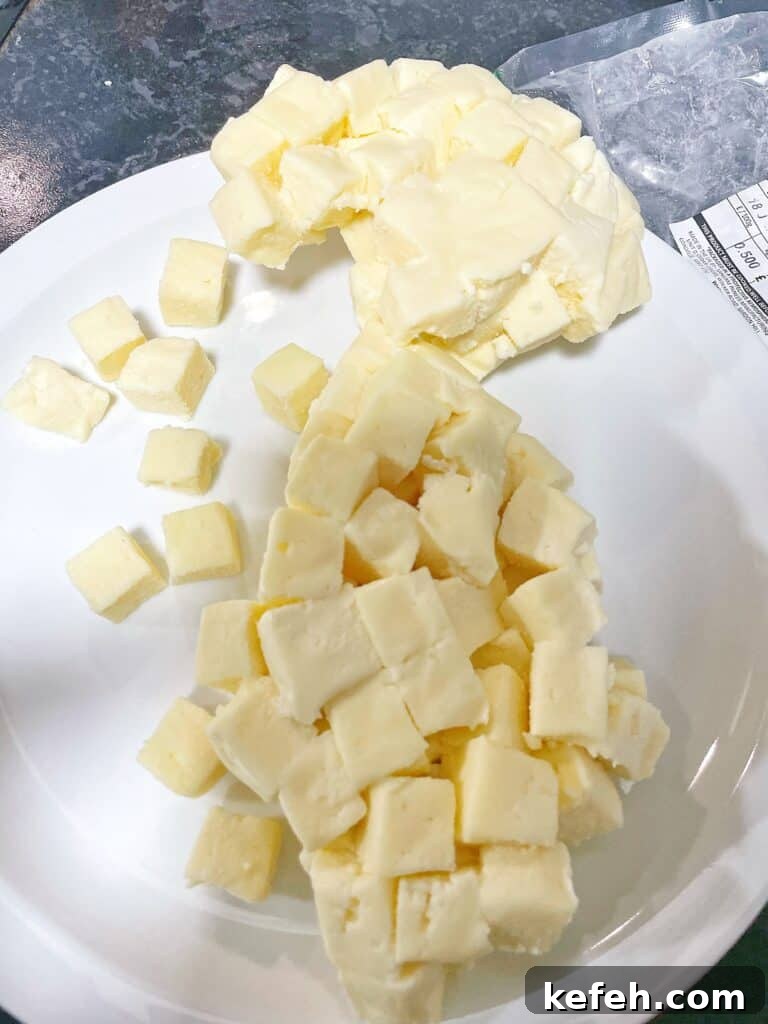
- Paneer — sold as a block or pre-cubed in most Asian stores and many mainstream supermarkets. Block paneer tends to be firmer and holds up better when frying.
- Leafy greens — baby spinach (fresh or frozen) and/or tinned mustard leaves are convenient. If using fresh spinach, freeze and slightly crush the leaves if short on time.
- Onions and garlic — a classic base for this cuisine.
- Spices — salt, turmeric, cumin seeds and chilli flakes or powder; nothing elaborate.
- Double cream — optional but gives a lovely richness and brightens the green colour.
⬜ What Paneer should I use for Saag Paneer?
Paneer is available as a whole block or pre-cubed. The block requires cutting but usually yields firmer cubes that don’t crumble while frying. Pre-cubed paneer is convenient but sometimes the cubes stick together, break apart or release starchy crumbs when fried. Choose based on whether you prefer convenience or a firmer final texture; I favour the block for the best results.
💪🏼 Making Paneer from scratch… worth the effort?
You can make paneer at home from milk and an acid like lemon juice or vinegar, strained through cheesecloth. It’s inexpensive and straightforward, but if ready-made paneer is available where you are, buying it saves time. If you enjoy kitchen projects and have the time, try making paneer once — it’s rewarding.
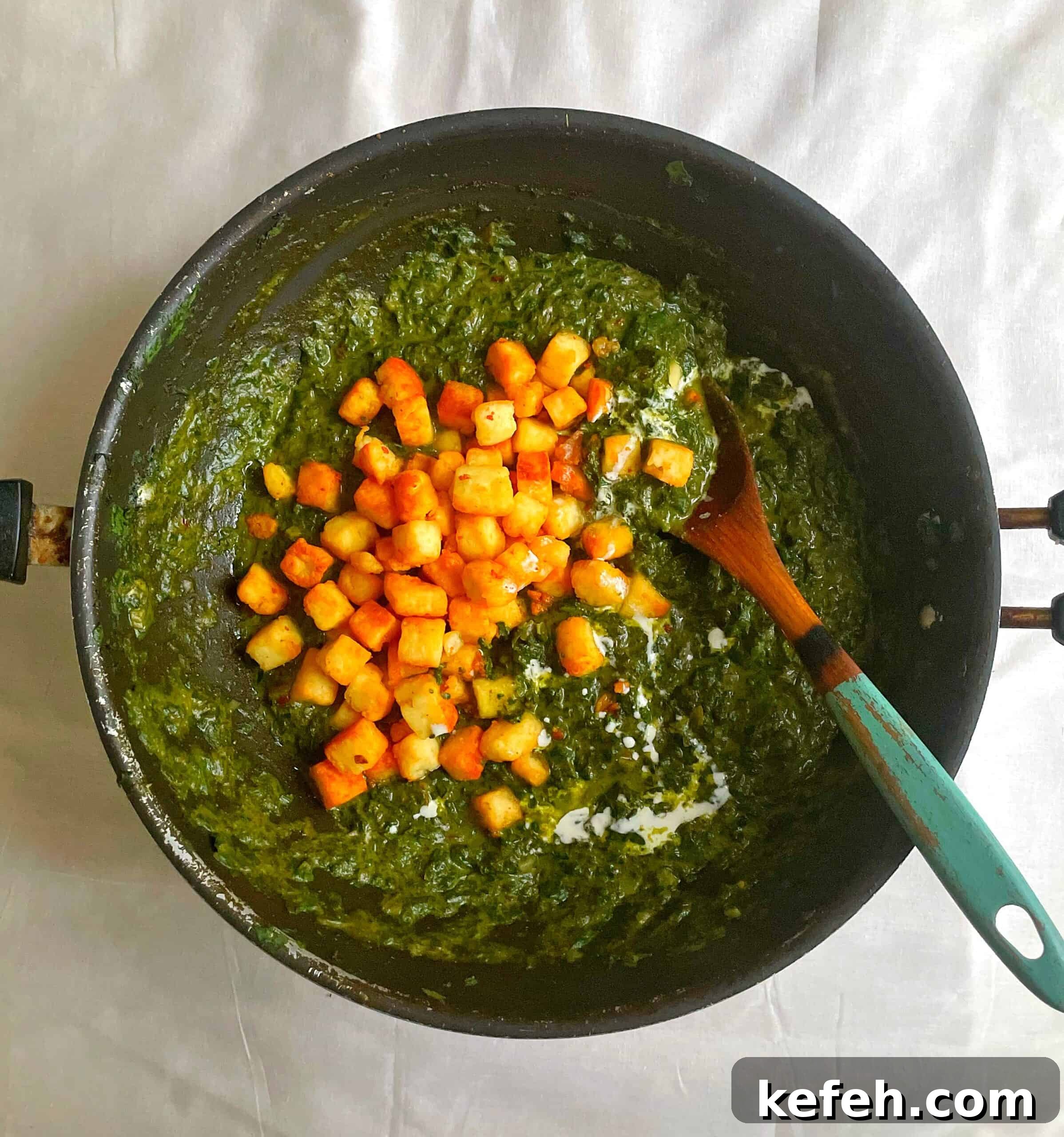
🥣 How do you make Saag Paneer?
Saag Paneer is accessible for beginner to intermediate cooks. The method is straightforward:
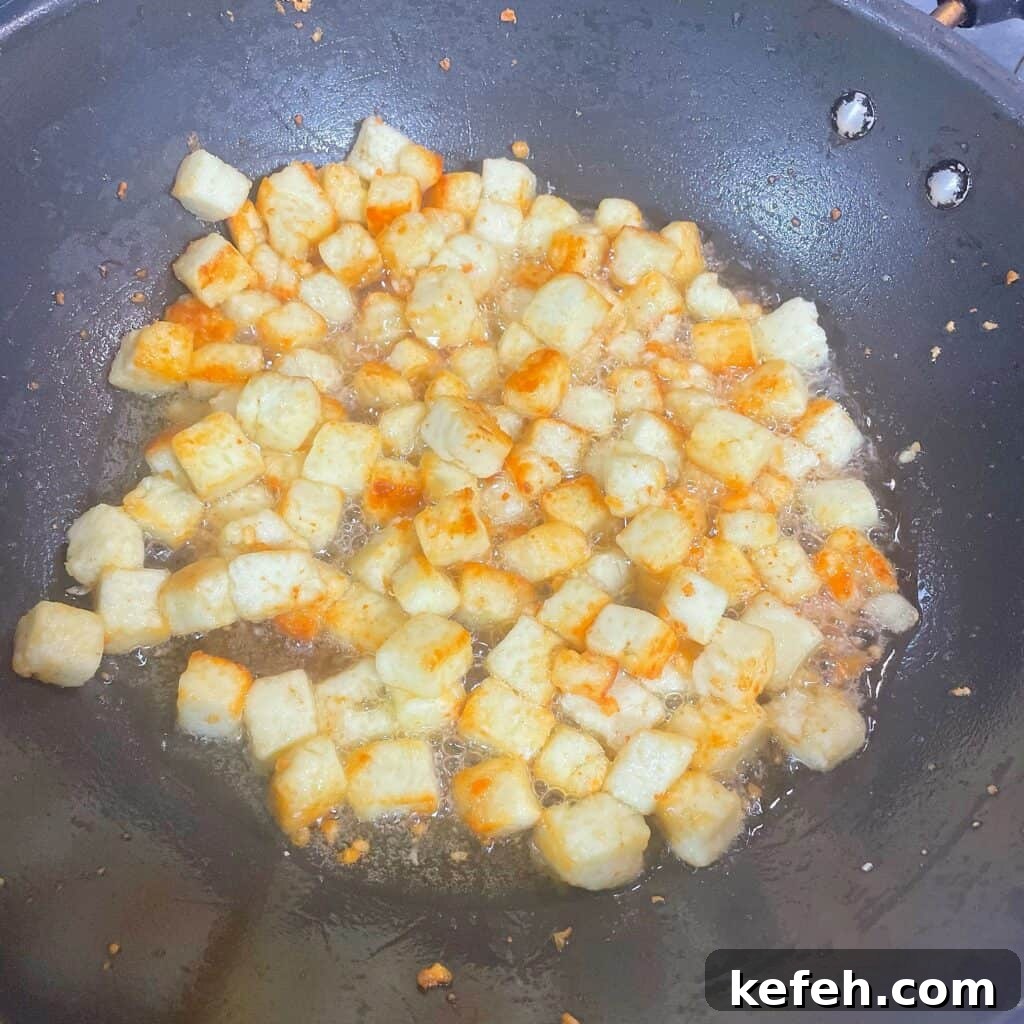
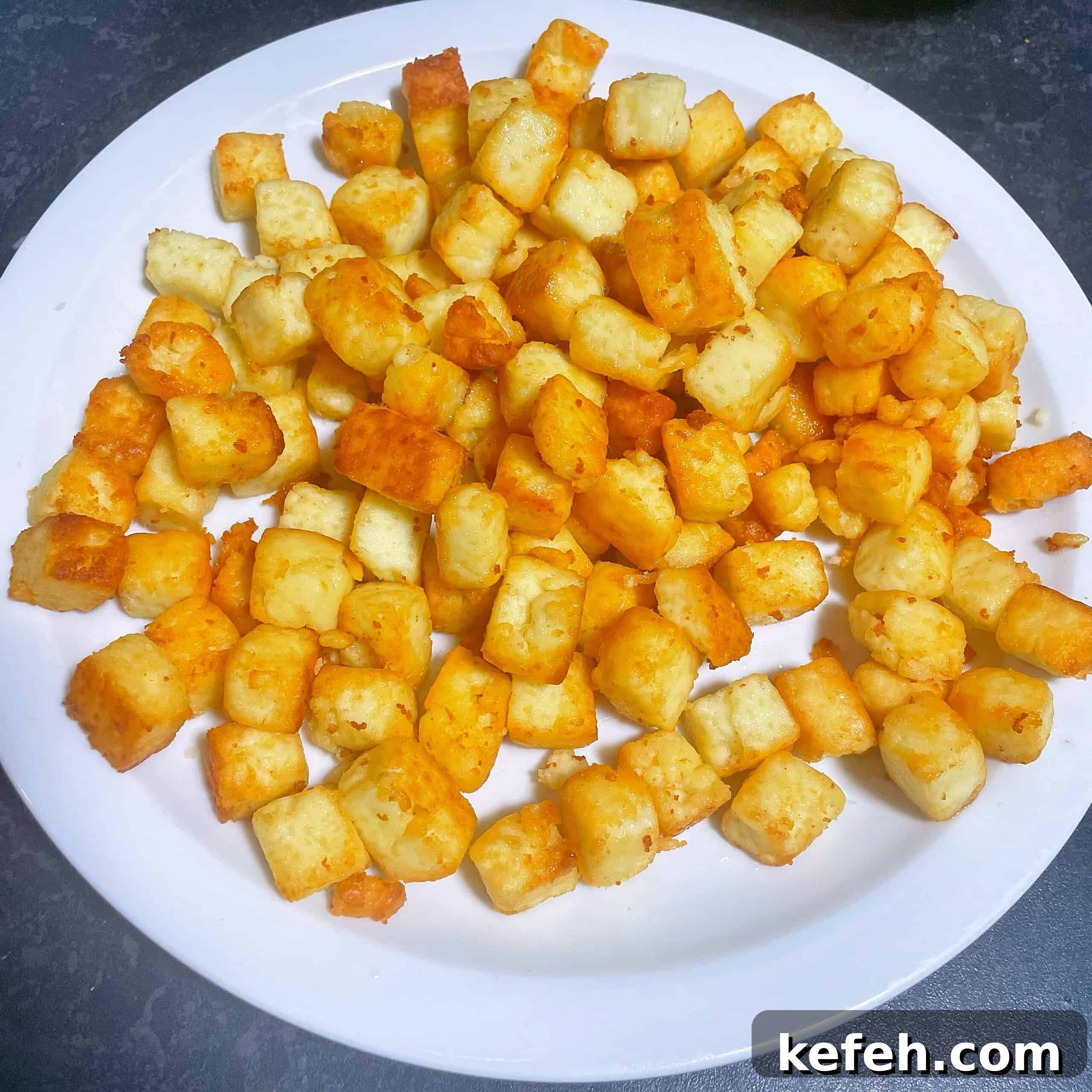
1. Heat oil or ghee in a wide pan and fry paneer cubes in a single layer until golden and crisp. Remove and set aside. Fry in batches if necessary.
2. Using the same pan with a little oil, fry chopped onions slowly until golden. Add minced garlic, ginger and the spices and cook briefly to release their aroma.
3. Add the leafy greens and cook over medium-high heat, allowing excess water to evaporate. Frozen spinach will take longer than tinned greens. Wilt until the greens are no longer watery.
4. If you prefer a smoother texture, pulse the greens briefly in a blender or food processor; otherwise leave them slightly textured.
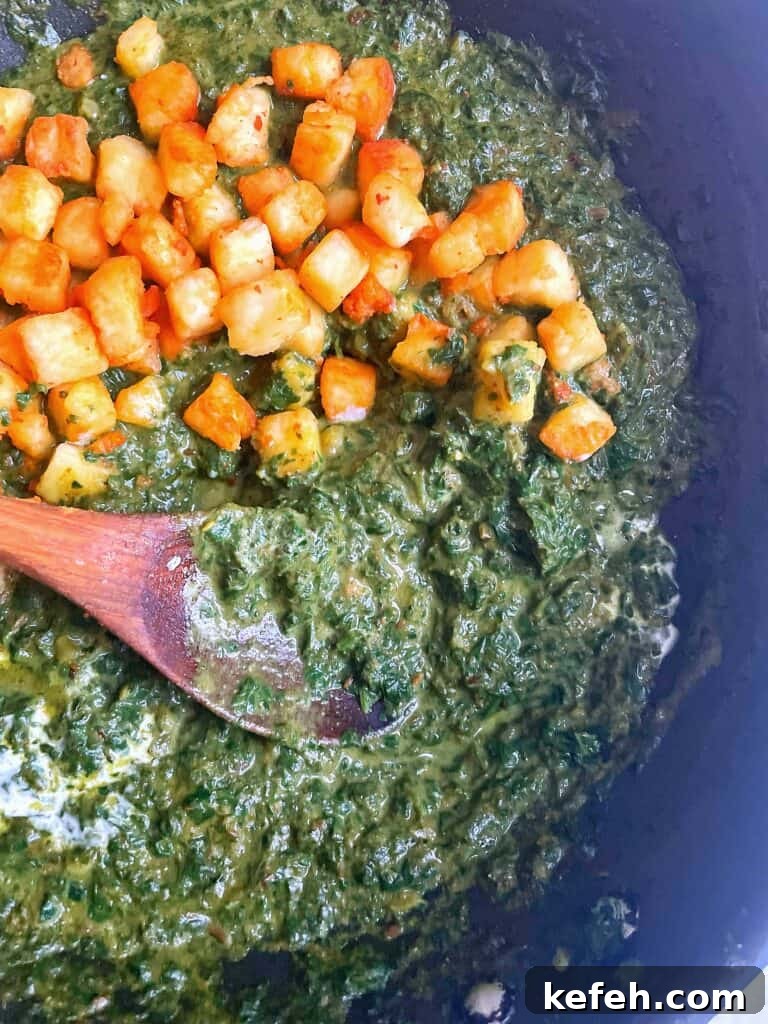
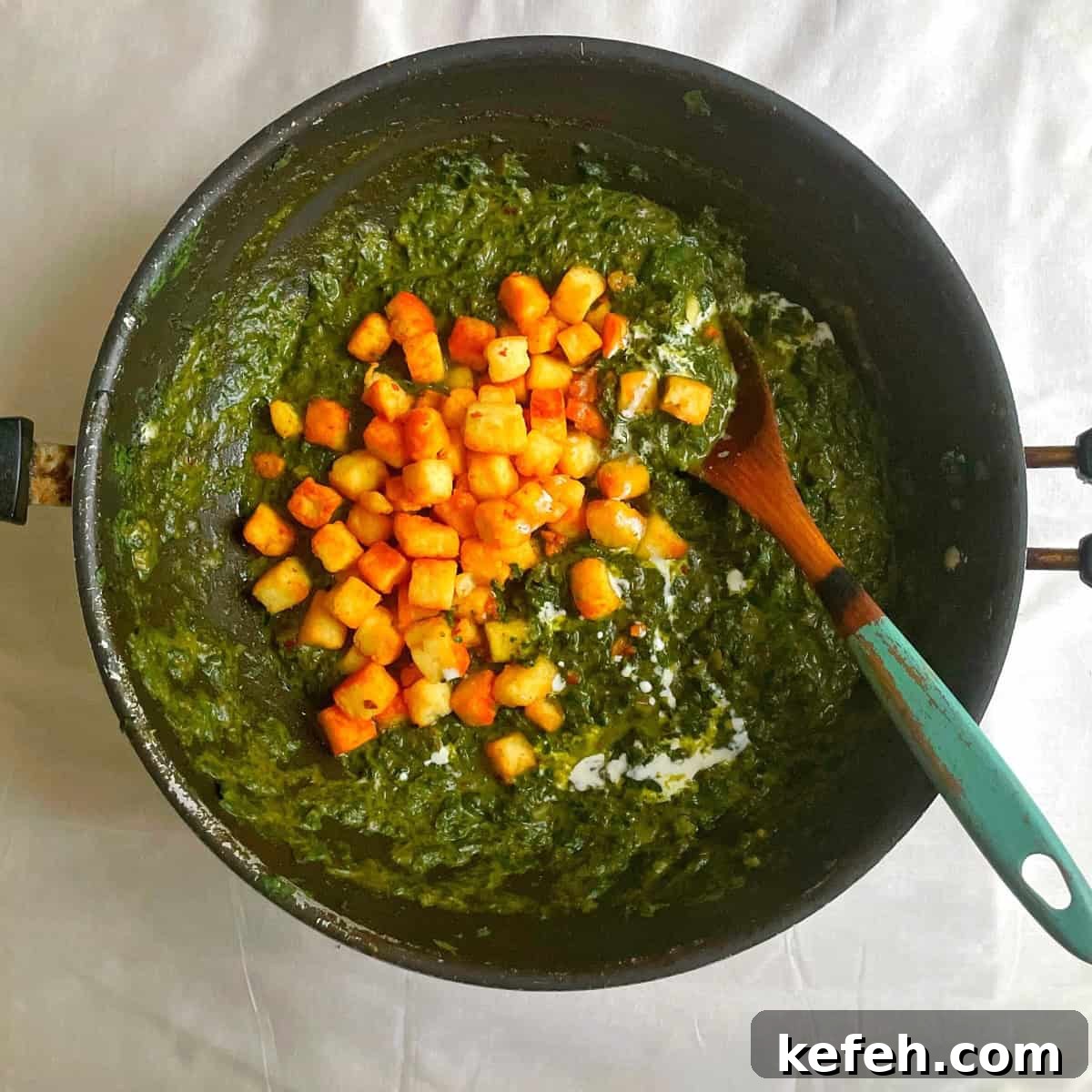
5. Return the paneer to the pan, stir to combine and simmer for a few minutes so the flavours meld. Finish by stirring in double cream off the heat to enrich the sauce and brighten the colour.
Once finished, turn off the heat and stir in the cream, then serve while hot.
💡 Substitutions, alterations and tips
- Halloumi can replace paneer; it’s similar in texture but saltier, so adjust seasoning.
- For a vegan version, use firm tofu instead of paneer.
- Swap paneer for potatoes to make Saag Aloo.
- Use a mix of greens — kale, fenugreek, arugula, mustard leaves, dandelion or radish leaves all work well. A combination adds complexity.
- Add chopped green chillies with the spices for extra heat.
- Replace double cream with single cream, milk or coconut milk for a lighter or dairy-free finish; yogurt can be used but may alter the texture and tang.
- For extra crunch, toss paneer cubes in a little cornflour before frying, but use fresh oil for frying the onions afterwards.
🍽️ How do you serve Saag Paneer?
Saag Paneer pairs beautifully with naan or steamed rice — choose based on preference. It also works well on its own as a low-carb meal and can be very satisfying without an accompaniment.
Other recipes using similar ingredients
Chilli Paneer – Palak Paneer – Aloo Palak – Palak Chicken
📋 Recipe
The BEST Saag Paneer
Ingredients
- 1.1 lb (½ kg) paneer cubed
- oil as needed
- 1 (110 g) medium onion finely chopped
- 6 cloves garlic minced
- 1 tablespoon ginger minced
- 1.5 teaspoon cumin seeds
- 2 teaspoon coriander powder
- salt to taste
- 0.5 teaspoon chili flakes
- 0.5 teaspoon turmeric
- 2 lb (1 kg) mixed leafy greens, chopped – either fresh, frozen or tinned mustard leaves, spinach, spring greens, arugula etc
- 5 tablespoon (75 ml) double cream known as heavy whipped cream in the US
Instructions
-
Heat enough oil in a pot or wide pan to generously fry the paneer. Once hot, add the paneer and fry on medium-high, stirring often until evenly browned. Drain and set aside.
-
If the oil is relatively clean you can keep 3–4 tablespoons for the next step; otherwise use fresh oil.
-
In the oil, add the chopped onion and fry until translucent and lightly golden. Add ginger, garlic and spices and fry for 2 more minutes.
-
Add the leafy greens. Cook on medium-high without a lid until they wilt and release their water, and that moisture has evaporated.
-
If you prefer smoother saag, pulse the greens in a food processor; otherwise leave as-is for texture.
-
Return the paneer to the pan and simmer together for a few minutes. Stir in the double cream right at the end, then remove from heat and serve.
Notes
📩 Want me to email this recipe to you?
Enter your email and I’ll send it over. You’ll also receive recipe updates and occasional extras from Fatima Cooks.