
I hate New Year’s resolutions.
New Year’s resolutions don’t work, so why make any?
I resolve not to make any New Year’s resolutions.
Those reactions are familiar and understandable. We hear them every year, often from well-meaning people who have been disappointed by goals that faded before February. It’s true that many resolutions fail quickly; only a small portion of people maintain every goal they set at the start of the year. But that statistic doesn’t have to be the final word on resolutions. There’s a different way to approach the new year that combines intention, faith, and practical habits—and it can make resolutions meaningful rather than discouraging.
I love New Year’s resolutions. For me the new year feels like a fresh page: a clean calendar, empty planner spreads, and the chance to decide what matters most. That feeling of possibility is energizing. If the idea of making resolutions feels heavy because of past failures, know this: how you set goals matters as much as the goals themselves.

Resolutions fail most often because they’re created from guilt, comparison, or sheer willpower rather than from clear purpose and sustainable habits. People declare sweeping changes—lose weight, get organized, read the Bible cover to cover—and then rely on grit alone. When a slip occurs, it’s taken as proof of personal failure. That pattern sets us up to abandon the pursuit rather than learn from it.
Christian New Year’s resolutions look different because they intentionally include God in the process. They begin with prayer and scriptural guidance, and they recognize that lasting change is a work of grace as well as effort. Instead of chasing perfection through self-discipline, these resolutions focus on steady growth—heart changes cultivated over time by the Holy Spirit. The aim is to grow in character and in the fruits of the Spirit, not simply to check tasks off a list.
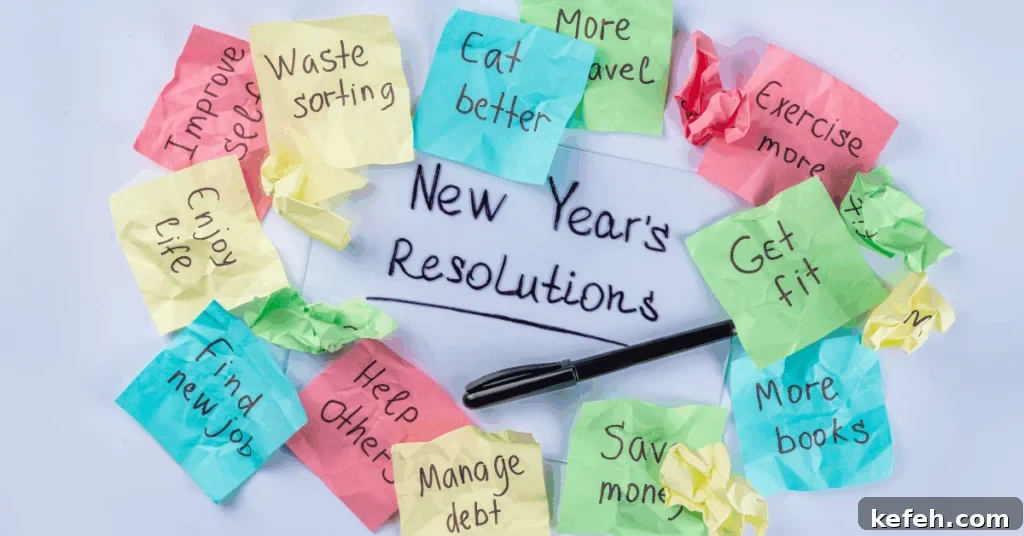
Don’t Be Afraid of Failure
An important shift is to stop viewing setbacks as definitive failure. Expect imperfection. If you stumble, that moment does not erase the good you’ve already done or the progress you will make tomorrow. In fact, stumbling often teaches humility, dependence on God, and practical insight about what to change next.
Most people will not keep every resolution they set, and that’s okay. The point is not flawless performance; it’s faithful pursuit. Even attempts that fall short can yield growth, new habits, and deeper reliance on God. And some of us will find that with prayerful planning and small, sustainable steps, we are able to accomplish far more than we expected.
What the Bible Says About Setting Goals
Scripture reminds us that our lives and efforts are framed by grace and purpose. We are not called to achieve by our own strength alone, but to live into the good works God prepared for us. When goals are aligned with that larger calling, they become acts of stewardship rather than mere personal ambition.
“For it is by grace you have been saved, through faith—and this is not from yourselves, it is the gift of God—not by works, so that no one can boast. For we are God’s handiwork, created in Christ Jesus to do good works, which God prepared in advance for us to do.” Ephesians 2:8–10 (ESV)
That passage helps reframe resolutions: they are not a path to earning worth, but a response to being loved and called. Goals become ways to live out that calling in everyday routines, relationships, and responsibilities. When your daily plans reflect eternal priorities, even small changes matter.
How to Set Faith-Filled Resolutions That Last
To make resolutions that actually stick, follow a few practical, faith-centered principles:
- Pray first. Begin with asking God for direction so your focus lines up with His priorities.
- Start small. Pick one or two achievable goals instead of a long checklist. Small, consistent actions build momentum.
- Anchor with Scripture. Let Bible truths shape your motivation so your goals are rooted in identity and purpose rather than guilt.
- Expect imperfection. Embrace grace for misses and plan simple ways to recover quickly when you slip.
- Celebrate progress. Acknowledge wins, however small. Celebrating growth encourages continued effort and builds confidence.
Invite God Into Your Plans
Write down a few intentions for the coming year, then place them before the Lord. Make your resolutions a partnership: your willing steps joined with God’s guidance and strength. When you do this, goals stop being burdensome demands and become pathways for transformation.
Let this year be shaped more by faithfulness than by flawless performance. With prayerful planning, small practical steps, and an openness to God’s work in and through your weaknesses, your resolutions can help you grow spiritually, emotionally, and practically. Whether you keep every plan or learn from the ones you don’t, God can use the whole process for good.
More Faith Posts You Will Love
Grace for the Now – walk through the five stages of change and determine which stage you are in currently.
30 Bible Verses Every Christian Should Know – Have you read all of these? This is a great list of Bible verses to memorize, too.
How to Stress Less About Your To-Do List – Let go of the fear of not getting it all done.
- Create a Healthy Holiday You
- Healthy Holiday: Get Your Head in the December Game!
- Healthy Holiday: The Best Way to Party & Not Regret It in the Morning
- Healthy Holiday: One Easy Way to Squeeze Exercise into a Tight Schedule
- Healthy Holiday: You Know What They Say About Perfectionism…