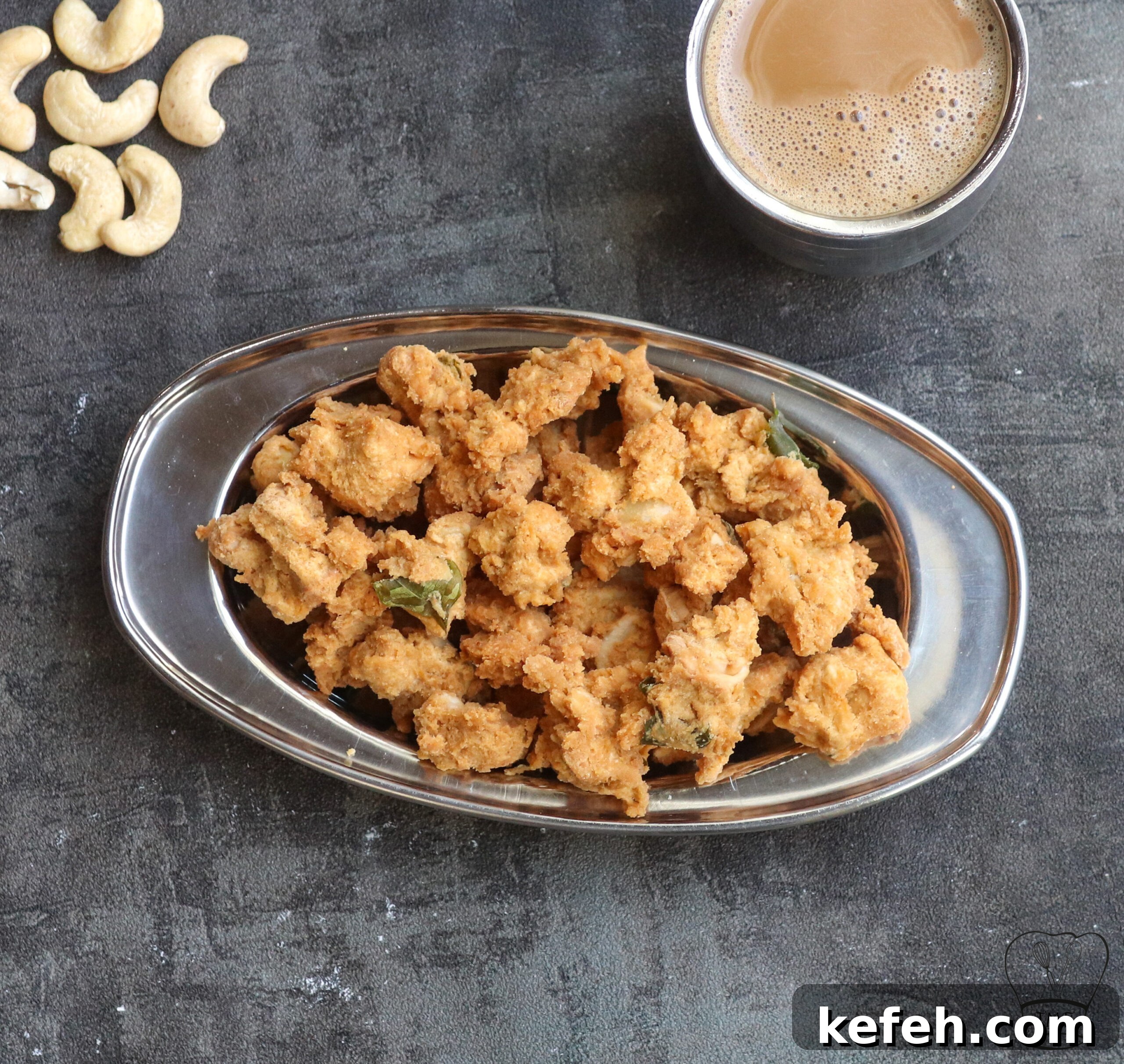
Cashew Pakoda recipe | Munthiri pakoda | Mundiri pakoda | Cashew fritters | Crispy cashew pakoda | Kaju pakoda | Diwali bakshanam | Festival savory | Kaju pakora | Gokulashtami snacks
Cashew pakoda, also known as munthiri pakoda, is a crunchy, savory tea-time snack popular in South India. These bite-sized fritters combine the creaminess of cashew nuts with a spiced gram-rice flour dough for a delightful contrast of textures. They are perfect for evening snacks, festive trays during Diwali, or packed for celebrations like Gokulashtami. Below you will find clear, step-by-step instructions, ingredient details, tips for the correct dough consistency, and storage advice to help you make perfect cashew pakodas every time.
Jump to:
- What kind of cashews to use
- Dough consistency
- Oil temperature and frying tips
- Ingredients
- Step-by-step method
- Variations and add-ons
- Storage and shelf life
Should I roast the cashews?
Do not roast the cashews beforehand. Use raw cashews; they will brown and become crisp during frying. For ease of coating, cut each cashew in half or into bite-size pieces so they are evenly encased by the dough.
Should I chop cashews?
Halving the cashews is recommended. If you prefer smaller pieces, chop them uniformly so each piece can be covered with the dough and fry evenly.
Should I make rice flour at home?
Store-bought fine rice flour works well for this recipe. You can also use idiyappam flour if that’s what you have. The key is to use a fine, soft rice flour so the dough holds together smoothly.
Can I skip ghee?
Ghee adds a rich aroma and better texture to the pakoda. If you prefer a vegan version, substitute ghee with 2 tablespoons of hot oil. Avoid adding excess ghee or oil, as too much fat will make the batter oily and affect the final texture.
What should be the consistency of munthiri pakoda dough?
The water amount can vary slightly depending on the brands of besan and rice flour. About 3/4 cup of water is a good starting point, added gradually. The dough should be:
- Sticky but manageable
- Soft enough to roll around a cashew piece
- Similar in pliability to poori or puri dough
How to check if the oil is at the right temperature
Drop a tiny piece of dough into the oil. If it rises steadily and comes up within a few seconds, the oil is at the correct frying temperature. If it floats up immediately and browns too fast, reduce the heat. If it sinks and rises slowly, increase the heat slightly. Maintain a medium flame while frying for even cooking and to avoid over-browning.
Shelf life for munthiri pakoda
When cooled completely and stored in a clean, airtight container, cashew pakodas stay crisp for up to two weeks. Keep them in a dry place—many prefer a stainless steel container. Ensure the pakodas are fully cooled before sealing to prevent moisture build-up.
How long should I fry cashew pakoda?
Fry on medium heat until the pakodas and cashew pieces turn golden brown and any initial froth from the batter has settled. Avoid frying on high flame, which risks burning the outer coating while leaving the inside undercooked.
Add-ons and variations for pakoda
- Finely chopped green chilli instead of chilli powder for fresh heat
- Coriander seeds or a pinch of roasted coriander powder for warmth
- Fresh coriander or mint leaves for a fragrant twist
- Adjust Kashmiri chilli powder for color without excessive heat
Ingredients
- 1/2 cup rice flour
- 2 cups besan (gram) flour
- A few curry leaves, chopped
- 2 tbsp ghee (or 2 tbsp hot oil for a vegan option)
- 1/2 tsp ginger powder
- 1/4 tsp baking soda (heaped)
- 1/2 tsp Kashmiri chilli powder
- Salt, to taste
- 1/2 tsp asafoetida (hing)
- 1 + 1/2 cups cashew pieces (halved or roughly chopped)
- 1 tsp oil for the dough + oil for deep frying
How to make Cashew Pakoda — Step by step
- Heat the frying oil in a wide pan and keep it on medium heat.
- In a large mixing bowl, add the ghee (or hot oil) and baking soda. Mix briefly to combine.
- Add salt, Kashmiri chilli powder, ginger powder, and asafoetida. Mix well so the spices integrate with the fat.
- Add the cashew pieces and chopped curry leaves. Toss to coat the cashews with the spiced mixture.
- Add the besan and rice flour. Mix thoroughly so the dry flours take up the spiced fat and coat the cashews.
- Gradually add water, a little at a time, and knead into a soft, slightly sticky dough. Stop when the dough is pliable and can be shaped around the cashews.
- Stir in 1 teaspoon of hot oil into the dough and mix well for a smoother texture.
- Test the oil by dropping a small piece of dough—if it rises within a few seconds, the oil is ready.
- Pinch a small portion of dough, wrap it fully around a cashew piece, and shape into a small ball or oval. Repeat without overcrowding.
- Fry the pakodas on medium heat, turning occasionally for even browning. Initially the oil may froth, but it will reduce as frying continues.
- When the pakodas and cashews turn golden brown and the froth subsides, remove with a slotted spoon and drain on kitchen paper or a wire rack.
- Allow them to cool completely before transferring to an airtight container for storage.
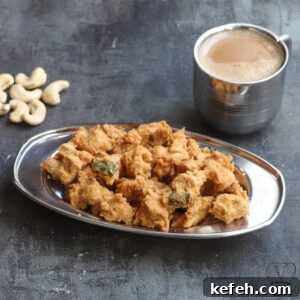
Notes
- Always use raw cashews so they crisp up while frying.
- Cut or chop cashews uniformly for consistent coating and frying.
- Adjust water gradually; the ideal dough is sticky yet rollable, similar to poori dough.
- Do not overcrowd the pan when frying—fry in small batches for even color and texture.
- Store cooled pakodas in an airtight container to preserve crunchiness for up to two weeks.