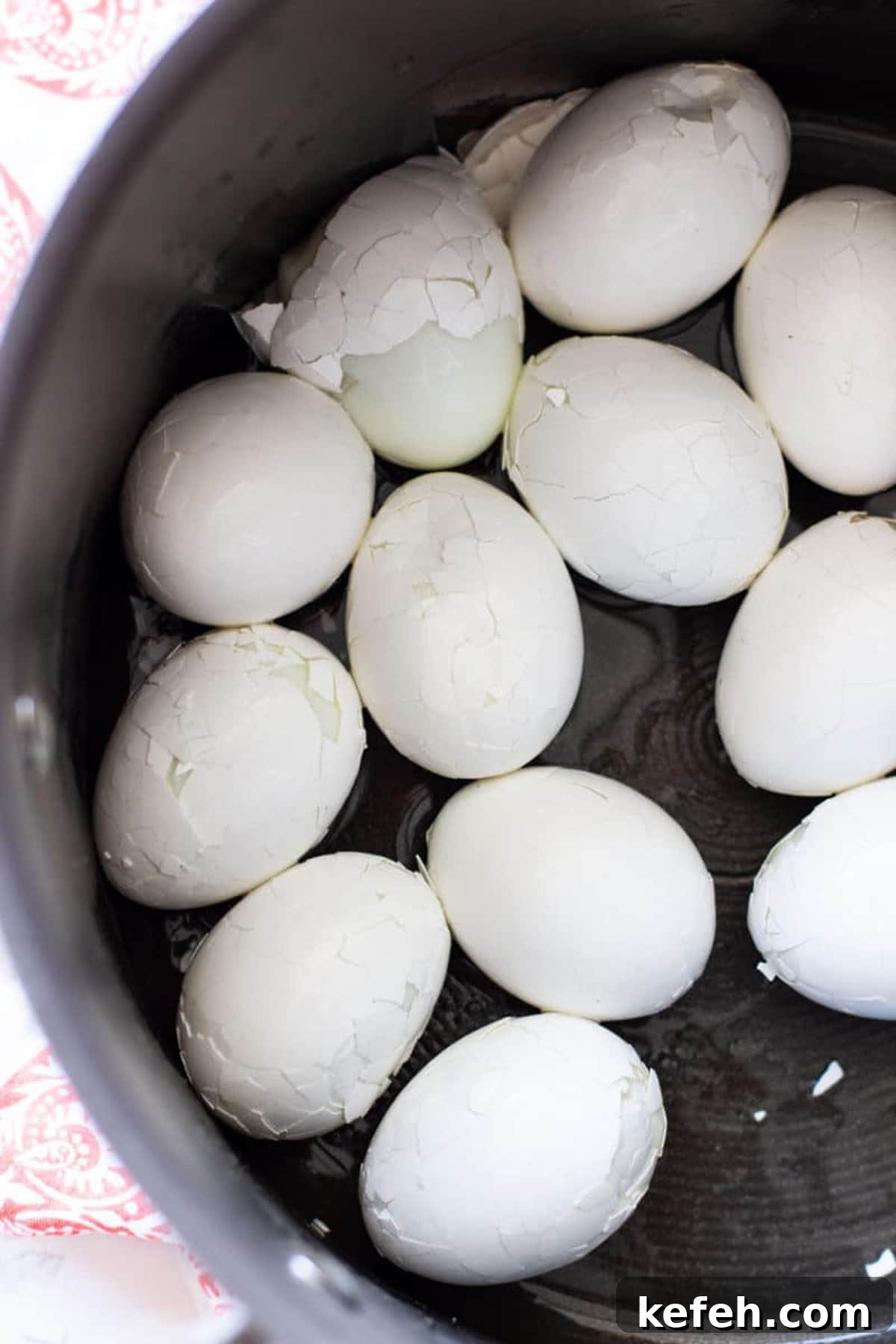
Using three simple steps, learn how to peel hard boiled eggs with a fail‑proof method. Removing the shell from hard boiled eggs has never been easier.
Peeling hard boiled eggs can be unexpectedly frustrating. The shell can tear the white, or the thin membrane clings so tightly the egg comes apart. The key to consistent, clean peeling is understanding the membrane and following a straightforward method. Below is a practical, easy-to-follow technique that produces reliably peelable eggs.
The translucent layer just beneath the shell is the membrane. When it sticks to the cooked white, peeling becomes difficult and the egg can tear, which ruins the appearance and texture. Several factors affect how well an egg peels: how fresh it is, how it was processed and handled, and how it is cooked and cooled.
Some eggs peel perfectly every time, others are stubborn. The method below minimizes sticking and breakage so you get smooth, intact hard boiled eggs. Follow these three steps for the best results.
📝 How To Peel Boiled Eggs
Step 1: Boiling Water
Start with a pot of boiling water. Put 7–8 cups of water (or just enough to fully cover the eggs) in a large pot and bring it to a rolling boil over high heat. Adding eggs to already boiling water encourages the whites to firm quickly, reducing the chance they’ll adhere to the membrane.
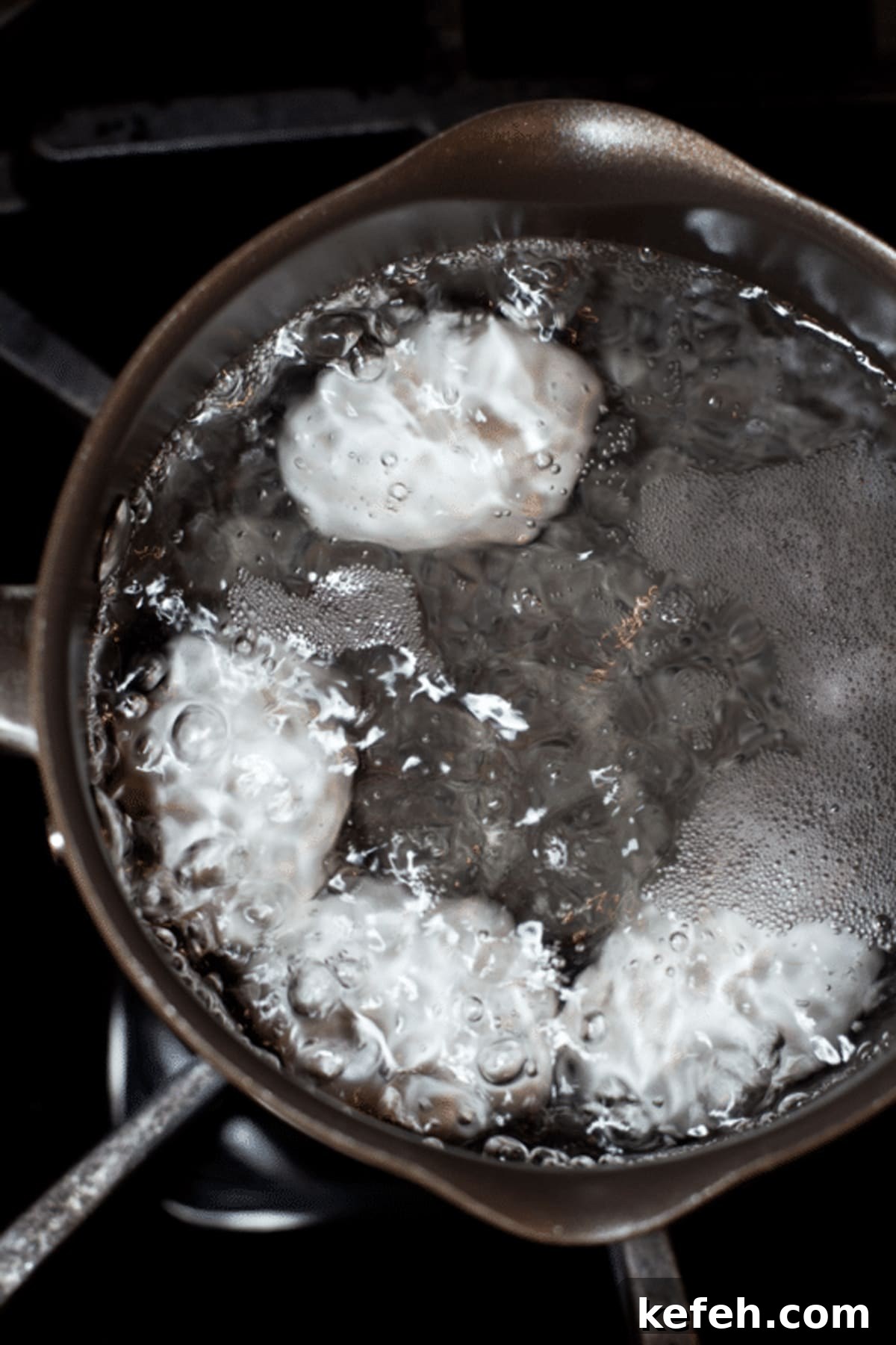
For large eggs, boil for about 8–10 minutes for fully set yolks. When the time is up, drain the hot water but leave the eggs in the pot to prepare for the next step.
Step 2: Ice Bath
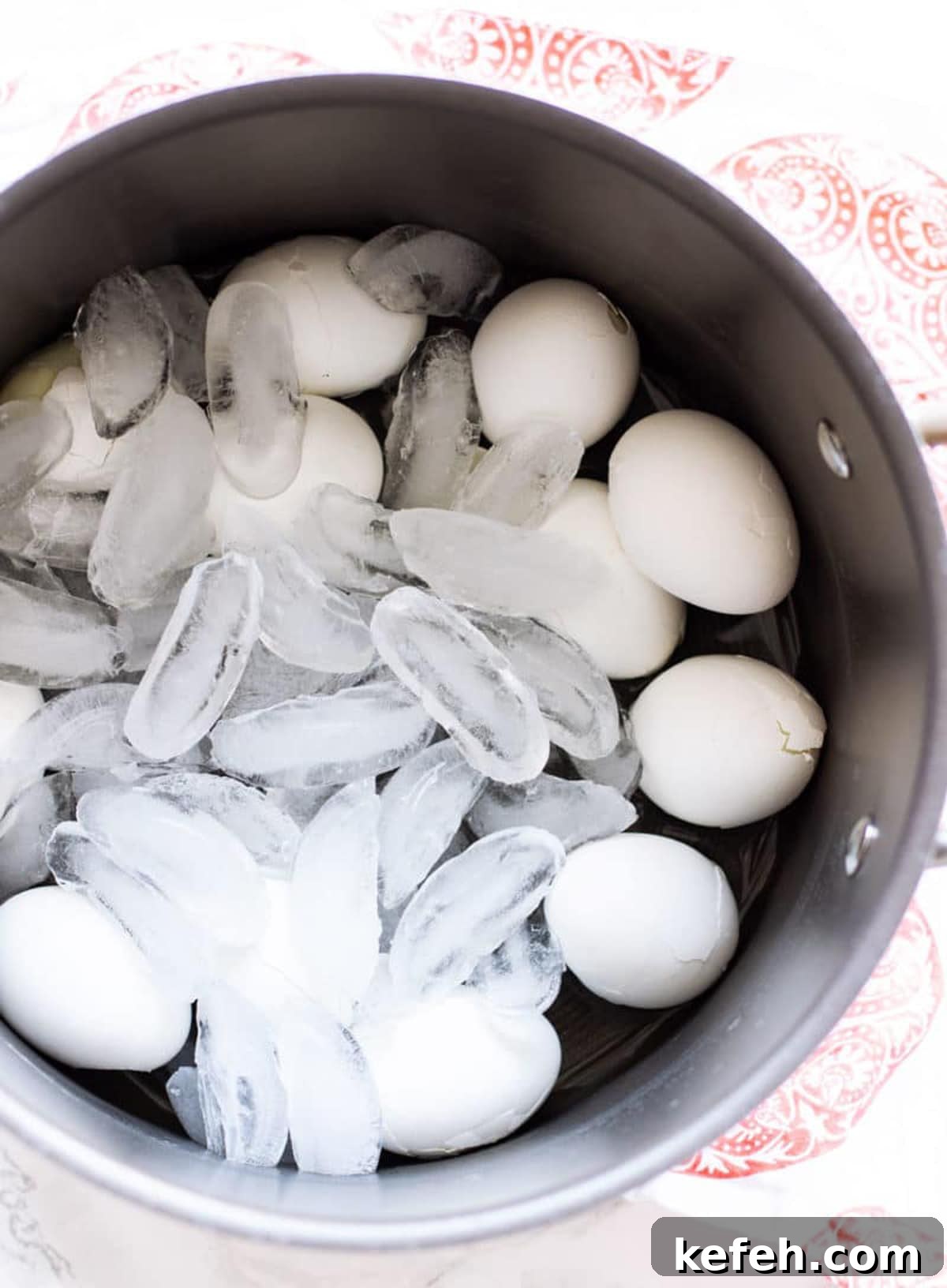
Immediately transfer the eggs to an ice bath. Add roughly 4 cups of ice to the pot or into a separate bowl filled with cold water so the eggs are fully submerged. Let them chill for about 10 minutes. Rapid cooling stops cooking and helps contract the egg away from the shell, loosening the membrane.
Step 3: Shake And Roll
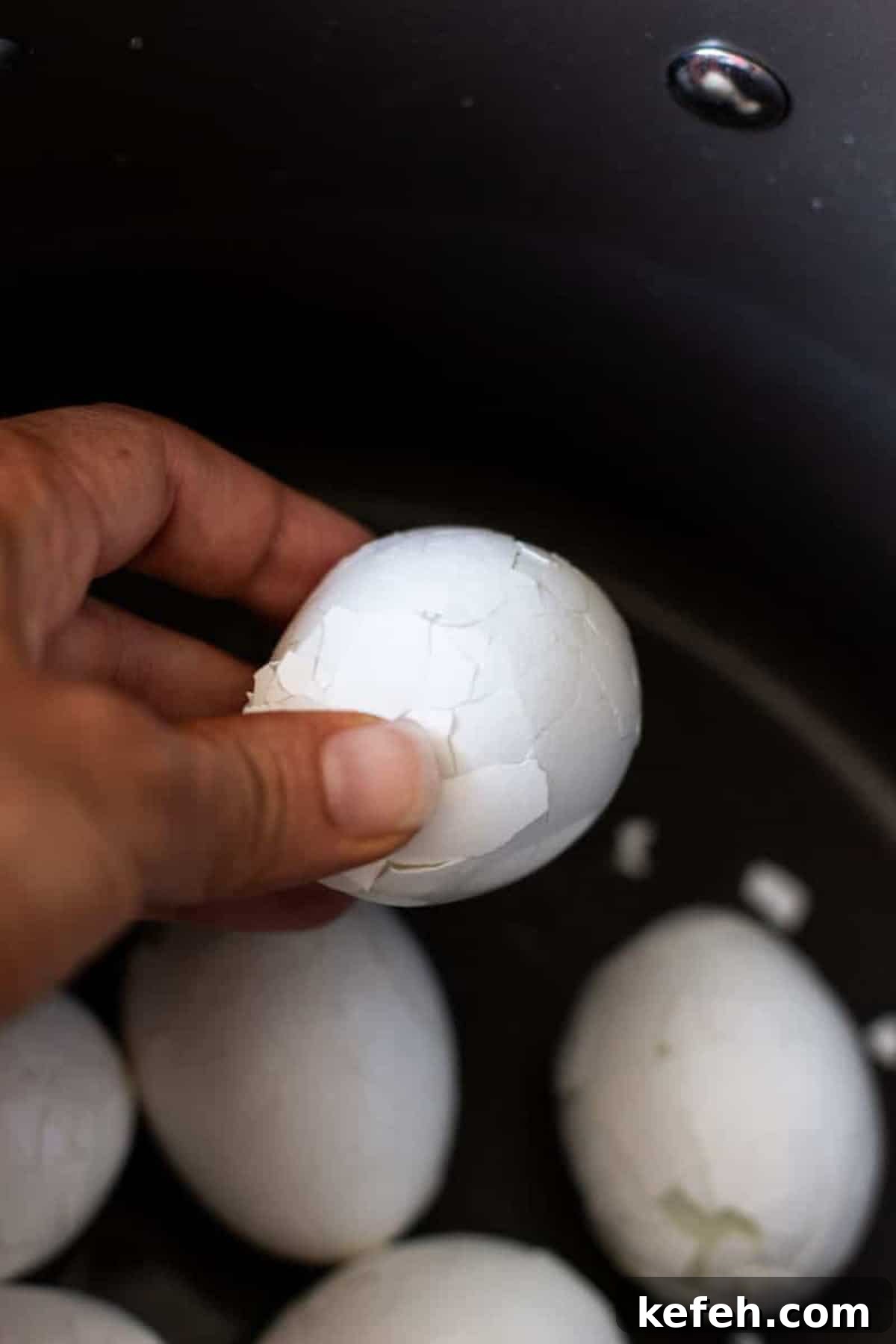
After the eggs are chilled, drain the ice water and give the pot a firm shake so the eggs roll and knock against each other and the pot. This will crack and loosen the shells. Many shells will come off or be very easy to peel after this step.
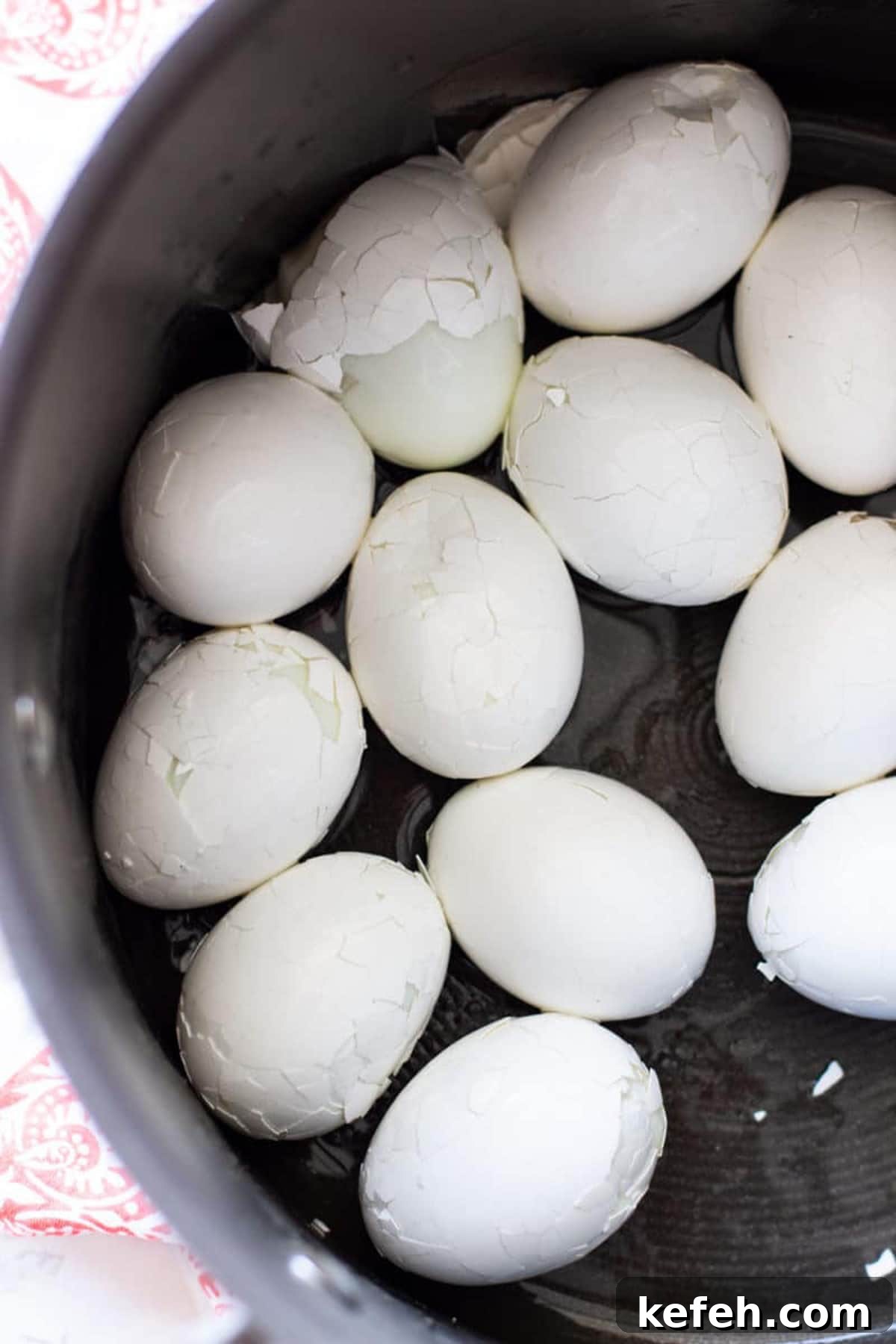
Pick up an egg and peel from the larger end where the air pocket typically sits; the shell should come away with minimal effort. Rinse the peeled eggs briefly under cold running water to remove any tiny shell fragments.
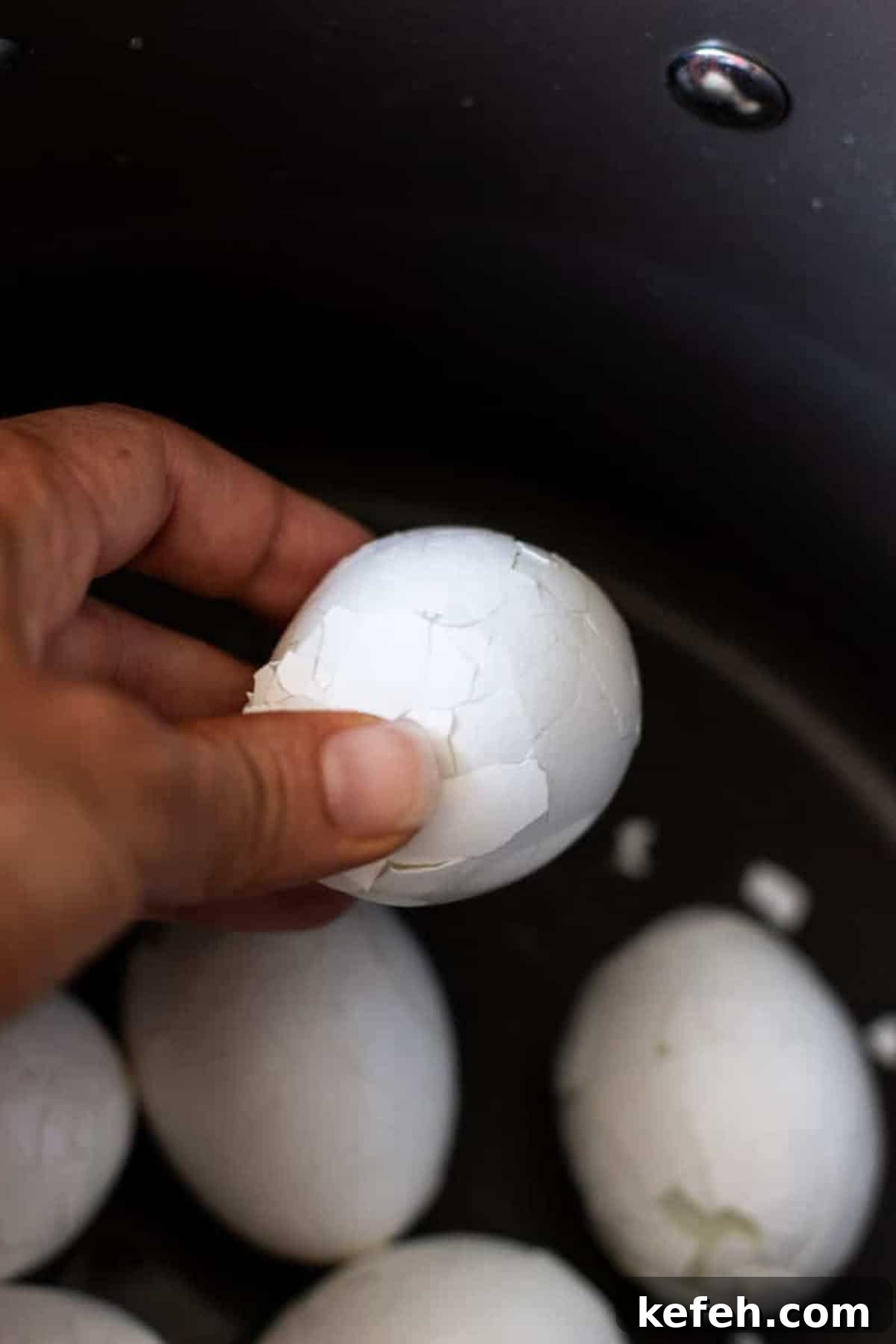
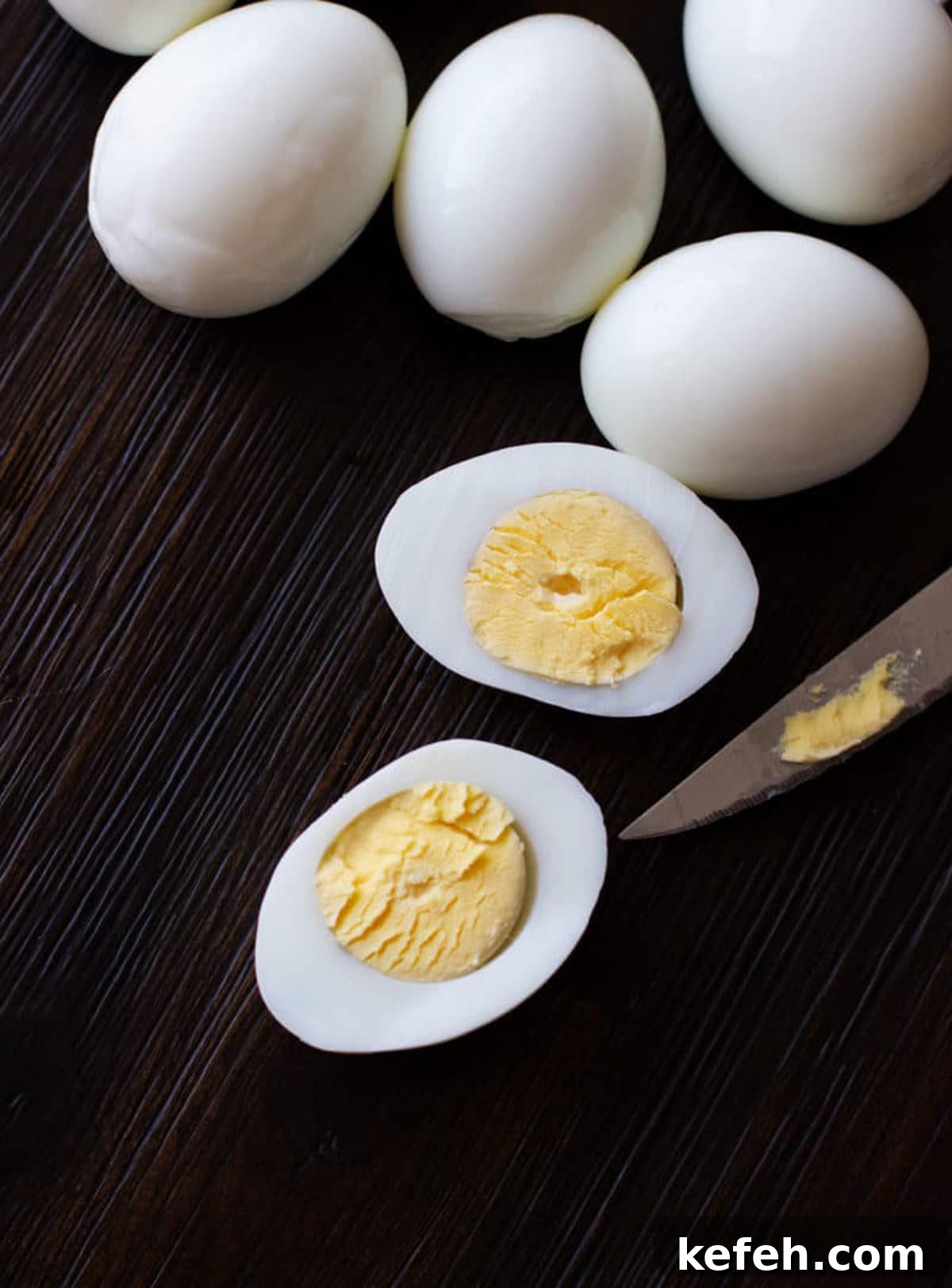
That’s all it takes. Following these steps produces evenly shaped, cleanly peeled hard boiled eggs ready for slicing, stuffing, or serving.
🙋 FAQs
Adding 1 teaspoon of baking soda to the boiling water raises the pH slightly, which can reduce the membrane’s tendency to stick to the egg white and make peeling easier with less breakage.
Both methods work, but adding eggs to already boiling water tends to yield easier peeling. Slowly heating eggs from cold can promote adhesion between the white and membrane.
💭 Expert Tips
- Try adding a teaspoon of baking soda to the boiling water to help eggs peel more easily.
- A splash of lemon juice or white vinegar in the boiling water can also alter pH and assist peeling.
- If a stubborn fragment remains, remove it under a gentle stream of cold running water — the water helps loosen any clingy membrane or shell pieces.
🥚 Hard Boiled Egg Recipes
Perfectly peeled hard boiled eggs are useful in many dishes — from deviled eggs to egg salad and potato salad. Use this peeling method whenever you prepare recipes that benefit from clean, intact eggs.
-
Southern Deviled Eggs Recipe
-
Avocado Egg Salad
-
Simple Potato Salad Recipe