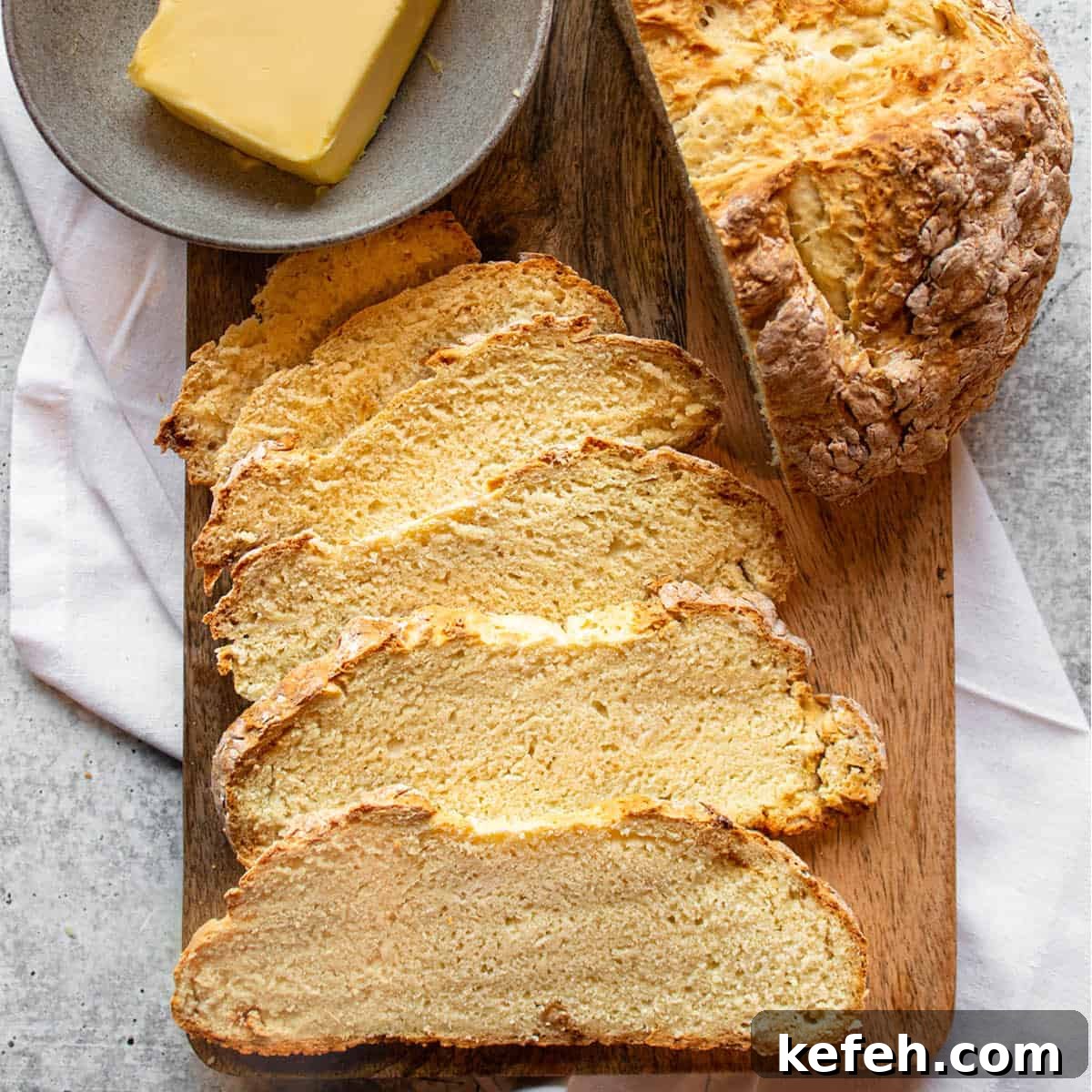
Irish soda bread is one of the simplest breads to make, relying on a few pantry staples. Often associated with Saint Patrick’s Day, this quick bread has a tender, biscuit-like crumb and is excellent with a smear of Irish butter. It requires no yeast and comes together in minutes, making it an approachable homemade bread for any baker.
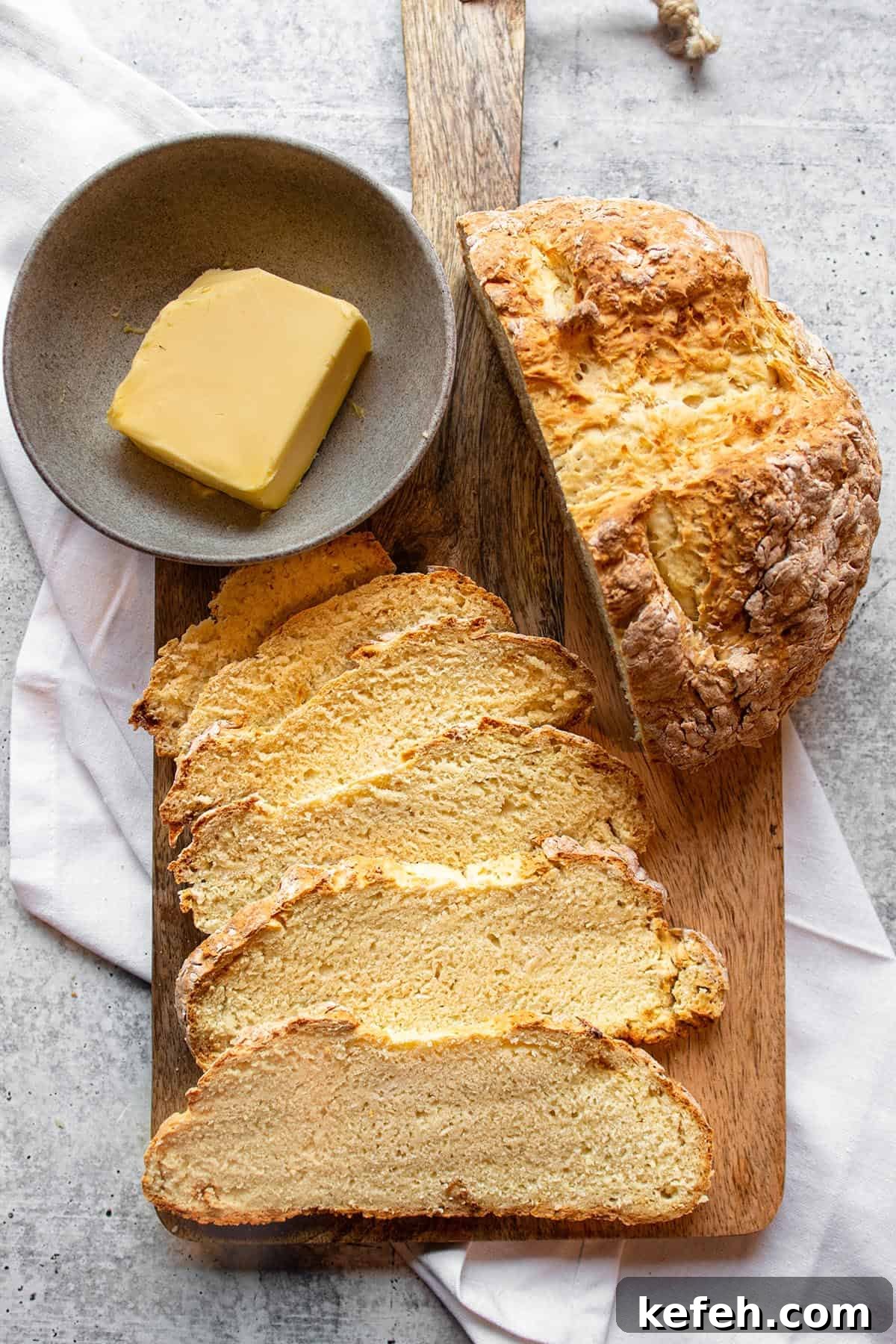
While corned beef and cabbage or hearty cabbage-and-sausage soups are commonly served in the U.S. for Saint Patrick’s Day, they are not strictly traditional Irish dishes. Soda bread, however, does have clear Irish roots and remains a beloved staple there.
The name “soda bread” refers to the leavening agent—baking soda—not a fizzy drink. Baking soda reacts with the acidity in the milk (traditionally buttermilk) to produce carbon dioxide, which gives the loaf its rise. Because it relies on chemical leavening rather than yeast, soda bread is quick to prepare and bake.
This version uses a simple buttermilk substitute: milk combined with a little vinegar. The acid in the vinegar mimics buttermilk’s acidity, activating the baking soda. The dough takes about five minutes to mix and then bakes into a lightly crumbly, slightly dense loaf that is closer in texture to a biscuit than standard yeasted bread.
Serve it warm with plenty of butter. It’s an ideal side for soups, stews, chili, or a Saint Patrick’s Day spread.
Ingredients
Notes on ingredients and simple swaps:
Milk + Vinegar: If you don’t have buttermilk, stir 2 tablespoons white distilled vinegar into 1 3/4 cups milk and let it sit for 10 minutes to slightly curdle. This provides the acidity needed to activate the baking soda.
Bread Flour: Bread flour is recommended for a slightly better texture in this recipe. All-purpose flour will work if that’s what you have, but bread flour gives a bit more chew and structure.
Baking Soda: Essential—this is the leavening agent that helps the loaf rise.
Full measurements are listed in the recipe card below.
Instructions
Preheat the oven to 400°F (200°C). If using a cast-iron skillet, place it in the oven while it preheats so it becomes hot before baking.
In a 2-cup liquid measuring cup, combine 1 3/4 cups milk with 2 tablespoons white distilled vinegar. Whisk and let sit for 10 minutes.
In a large bowl, whisk together 4 1/4 cups bread flour, 2 teaspoons baking soda, and 1 teaspoon kosher salt.
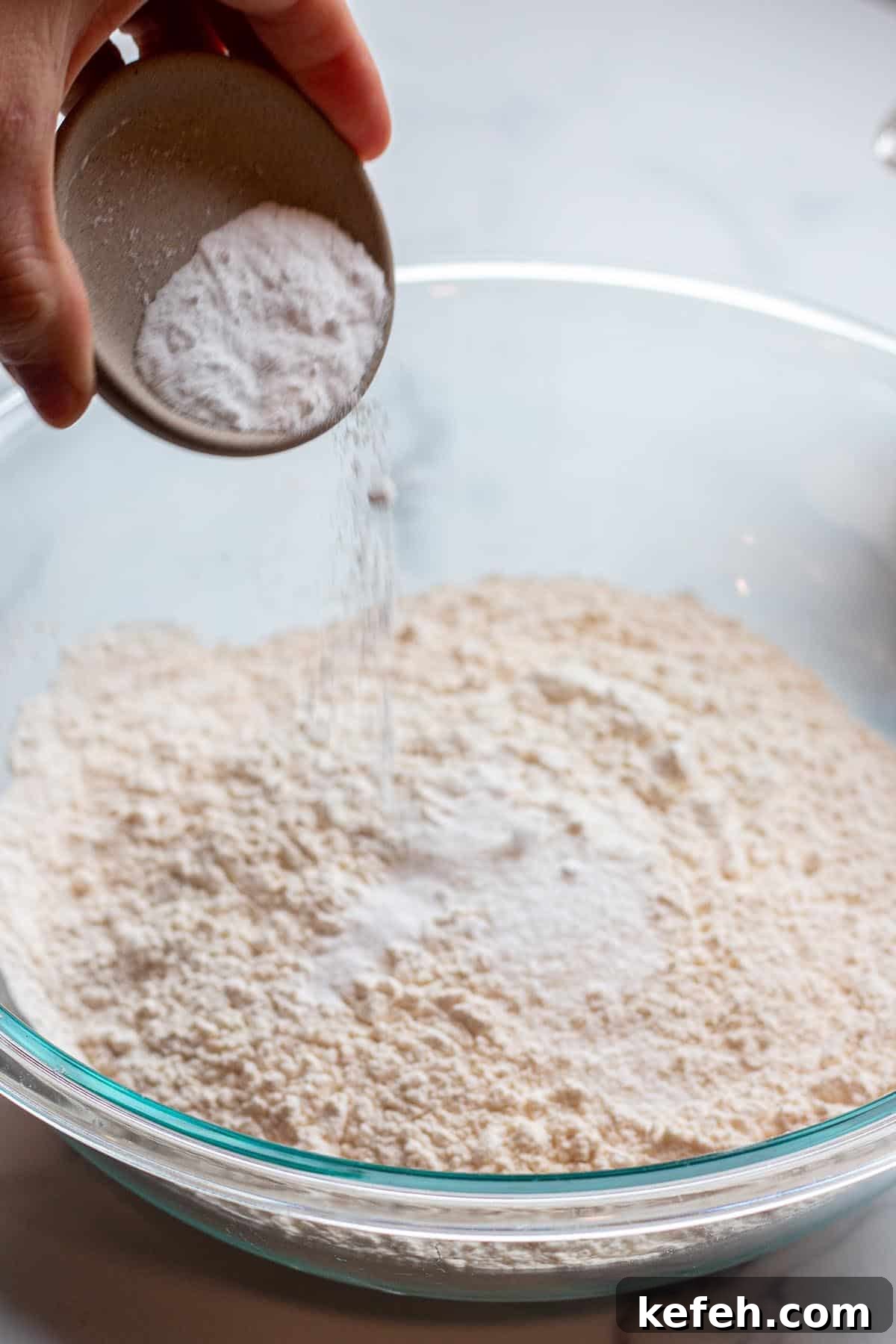
Add 4 tablespoons cold unsalted butter, cubed and slightly softened, to the flour. Cut the butter in with a pastry cutter or your fingers until the pieces are pea-sized or smaller.
Whisk 1 large egg into the milk mixture, then gradually add the milk-and-egg mixture to the dry ingredients, stirring with a fork or Danish dough whisk until combined.
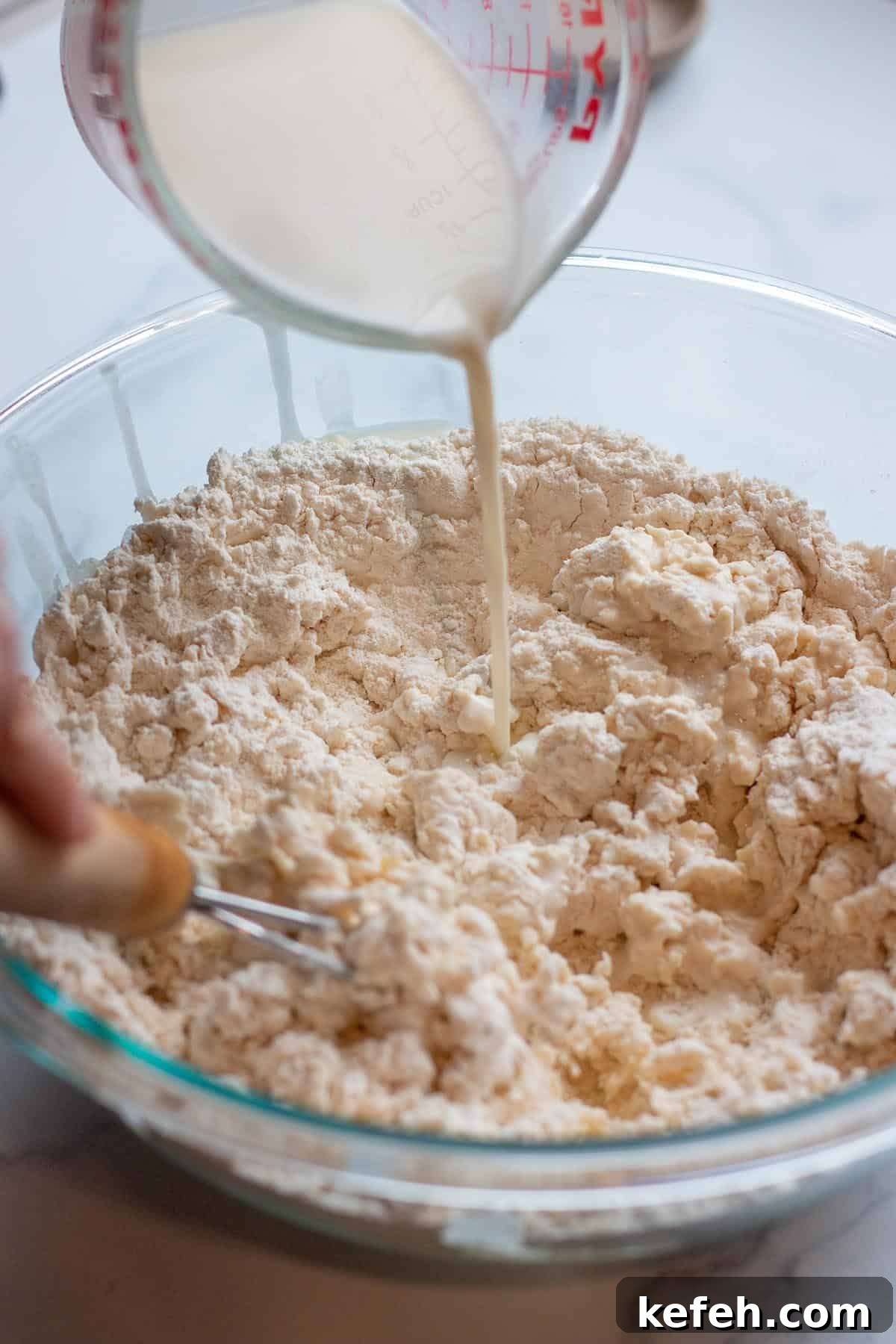
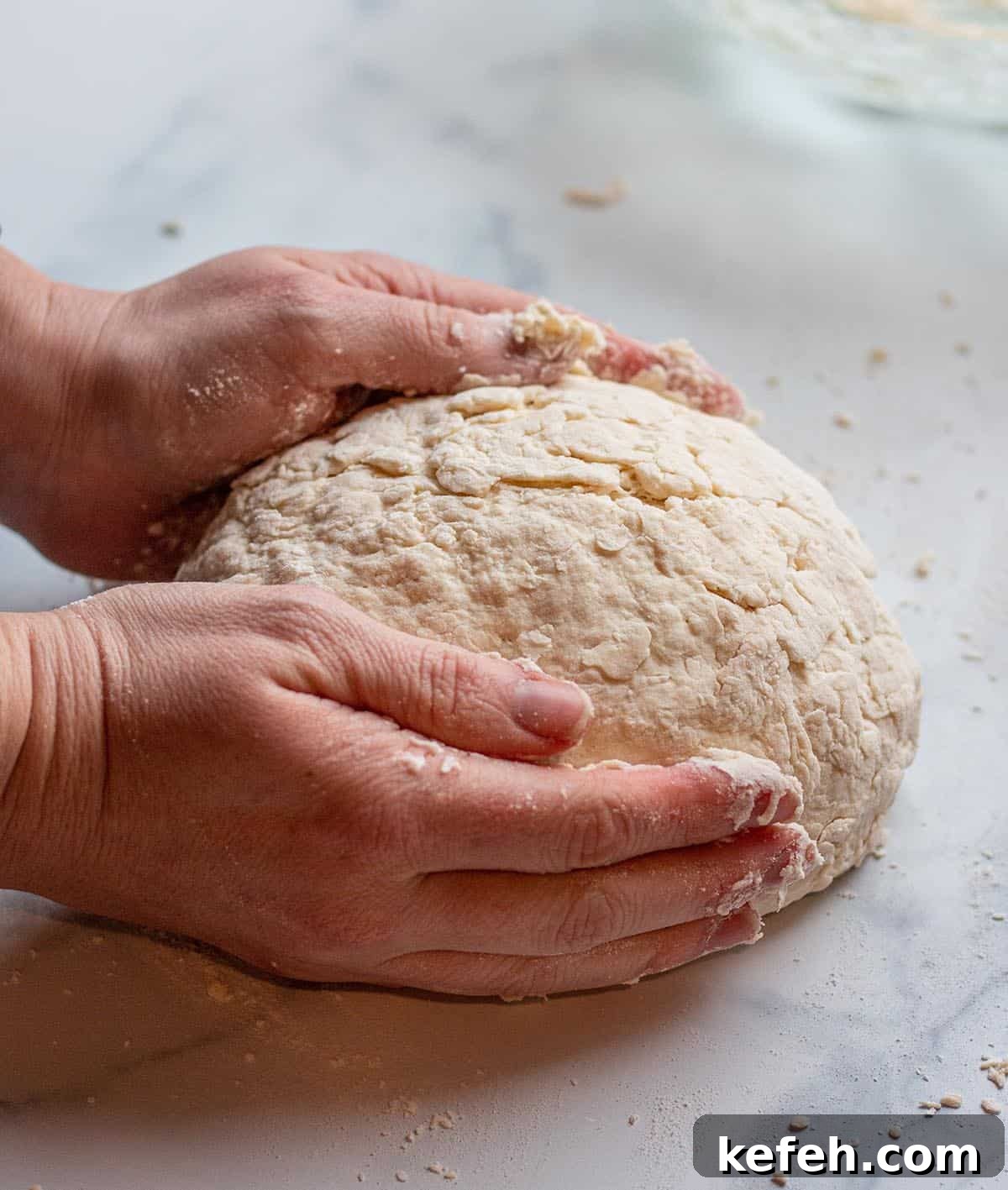
The dough will be sticky. Lightly flour your hands and work surface and bring the dough together, adding a little extra flour if it’s too sticky to handle. Form the dough into a round loaf, being careful not to overwork it—overhandling will make the loaf denser.
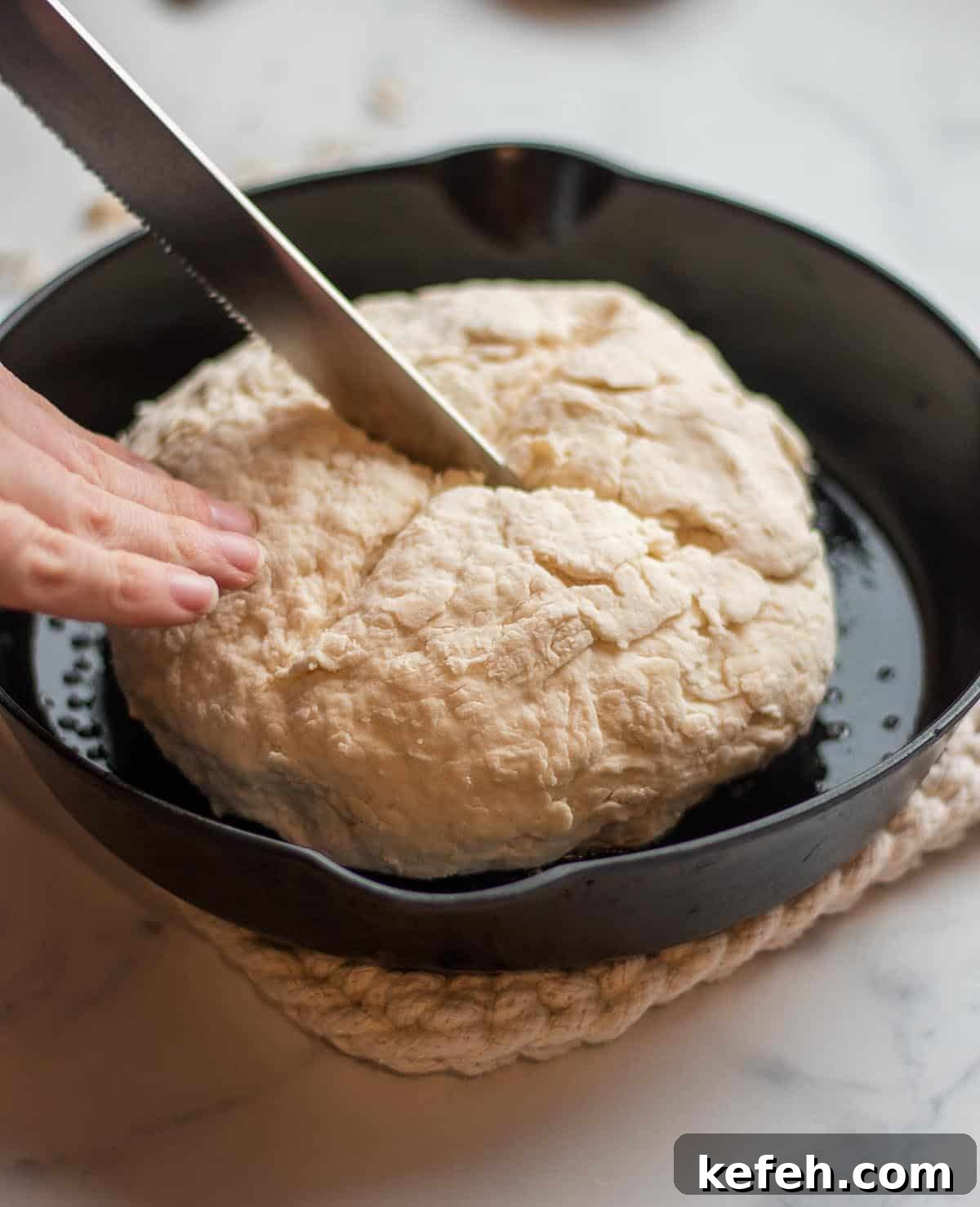
Remove the hot skillet from the oven and add 1 tablespoon butter to coat the bottom—this prevents sticking and encourages a crisp crust. Place the dough into the skillet and, using a serrated knife, cut a deep cross about 1/2–3/4″ deep into the top of the loaf. This helps the center bake through.
Bake for about 40 minutes, or until the top is golden brown and the loaf sounds hollow when tapped. If the top darkens too quickly, tent it loosely with foil for the remainder of the bake time.
Remove the bread from the oven, transfer to a wire rack, and let cool slightly before slicing. Serve warm with butter.
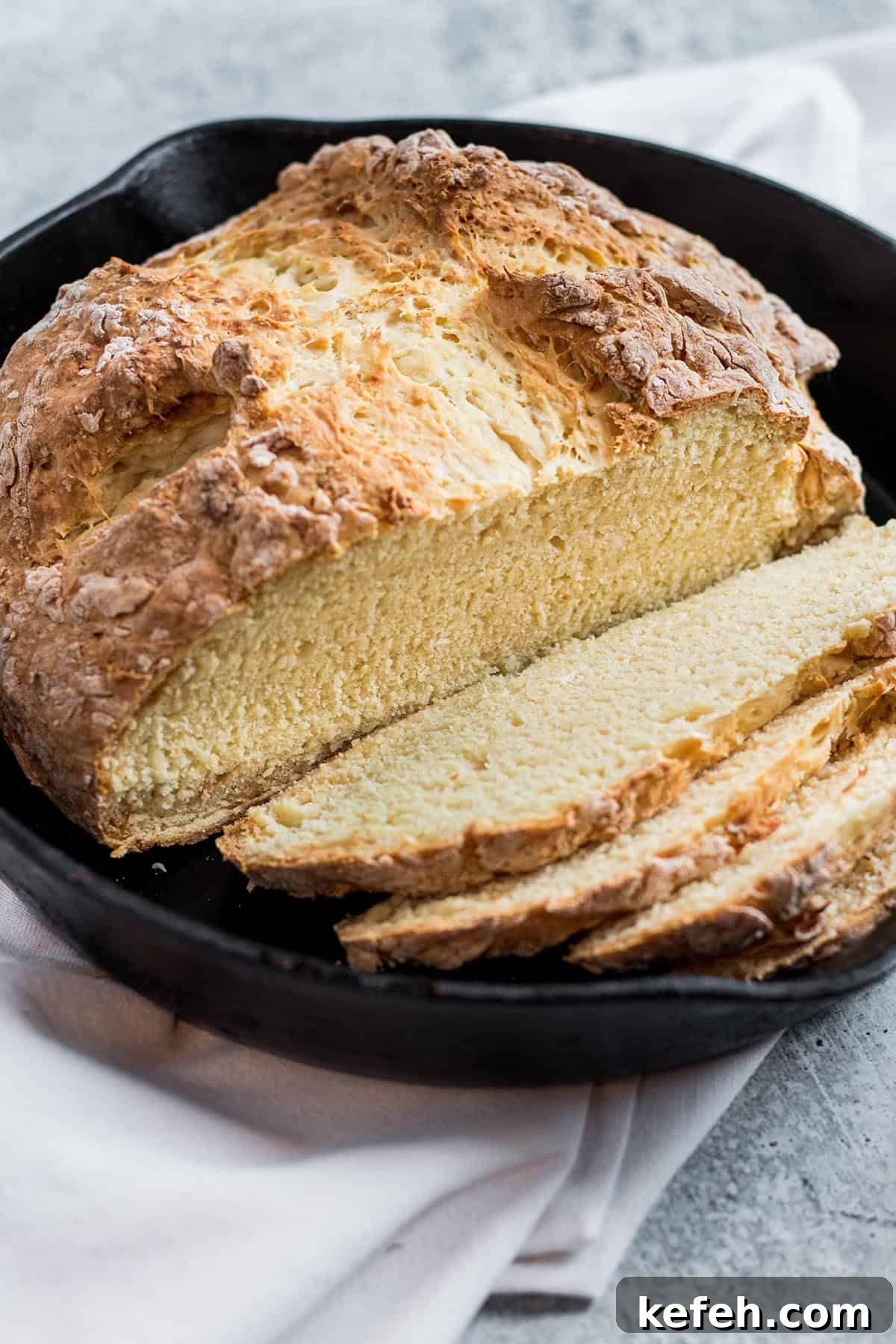
This loaf pairs well with soups, stews, chili, or a celebratory dinner. If you want to follow a more traditional Irish style, add about 1 cup raisins and 1 tablespoon caraway seeds to the dry ingredients for a classic fruit-and-seed soda bread.
-
Crab and Corn Chowder
-
What to Serve with Chili
-
Sausage Spinach Tortellini Soup
-
Recipes to Make in a Dutch Oven




Other Saint Patrick’s Day ideas: Shepherd’s pie, corned beef and cabbage, or roasted Dutch oven potatoes all work nicely alongside soda bread. The loaf also makes a great companion for weeknight soups and stews.
📋Recipe
Irish Soda Bread without Buttermilk
Equipment
- Cooling Rack
- Large Mixing Bowl
- 9″ Cast Iron Skillet (or baking sheet)
- Sharp Serrated Knife
- 2 Cup Liquid Measuring Cup
Ingredients
- 1 & 3/4 Cup Milk
- 2 Tablespoons White Distilled Vinegar
- 4 & 1/4 Cup Bread Flour
- 2 teaspoon Baking Soda
- 1 teaspoon Kosher Salt
- 4 Tablespoons Unsalted Butter cubed and slightly softened
- 1 Large Egg
Optional
- 4 Tablespoon Butter 1 tablespoon for the skillet; remainder for serving
Instructions
- Preheat oven to 400°F. If using a cast iron skillet, place it in the oven while it heats.
- Combine milk and vinegar in a 2-cup measuring cup, whisk, and let sit 10 minutes.
- In a large bowl, whisk together the flour, baking soda, and salt.
- Cut the cubed butter into the flour until pieces are pea-sized.
- Whisk the egg into the milk mixture.
- Slowly add the milk mixture to the dry ingredients, stirring until combined.
- Form the sticky dough on a lightly floured surface into a round loaf, avoiding overworking it.
- Remove the hot skillet, add 1 tablespoon butter, then place the dough in the skillet. Score a deep cross (1/2–3/4″ deep) on top.
- Bake 40 minutes, or until golden and hollow-sounding when tapped. Tent with foil if the top browns too quickly.
- Cool on a wire rack, slice, and serve warm with butter.
Notes
Bread flour gives a slightly better texture, but all-purpose flour will work in a pinch. If you prefer a traditional loaf, add 1 cup raisins and 1 tablespoon caraway seeds to the dry ingredients.
If you don’t have a cast-iron skillet, bake the loaf on a prepared sheet pan.
Storage: Soda bread is best eaten within 2–3 days at room temperature. Wrap well in foil to retain moisture. You can freeze the loaf for up to 2 months, though it won’t be as fresh after thawing.
Nutrition
Carbohydrates: 38 g
Protein: 7 g
Fat: 6 g